Wedding Videography7 min read
Wedding film storytelling
A wedding is not a story. It is a day. A film has to be given a shape, which mostly means deciding what not to show.

Films with a shape, from Irish weddings since 2020.See the work
Everything that happened is the story: nine hours, three hundred guests, a shower at two, an uncle who cried through the dessert. The plot is the part we show, in the order we show it. A five minute film uses about five per cent of the day.
That sounds wasteful. It is the job. A film that tries to include everything is a record, and a record is what the photographs and the full ceremony edit are for.
The shape we build
The usual order, and it is usual because it works: the morning, the venue, the arrival, the ceremony, the greeting line, the two of you alone for twenty minutes, the meal, the speeches, the floor, the last of the light.
Nine parts in the order a day happens. What makes it a film rather than a list is what sits in the middle.
Ten weddings,
viewed properly.
There is confetti, a dog underfoot, a small committee of Irish wolfhounds and two grooms making a run for it. Press play and put the sound on. The still frames only get you so far.
See the full gallery


The ceremony is the spine
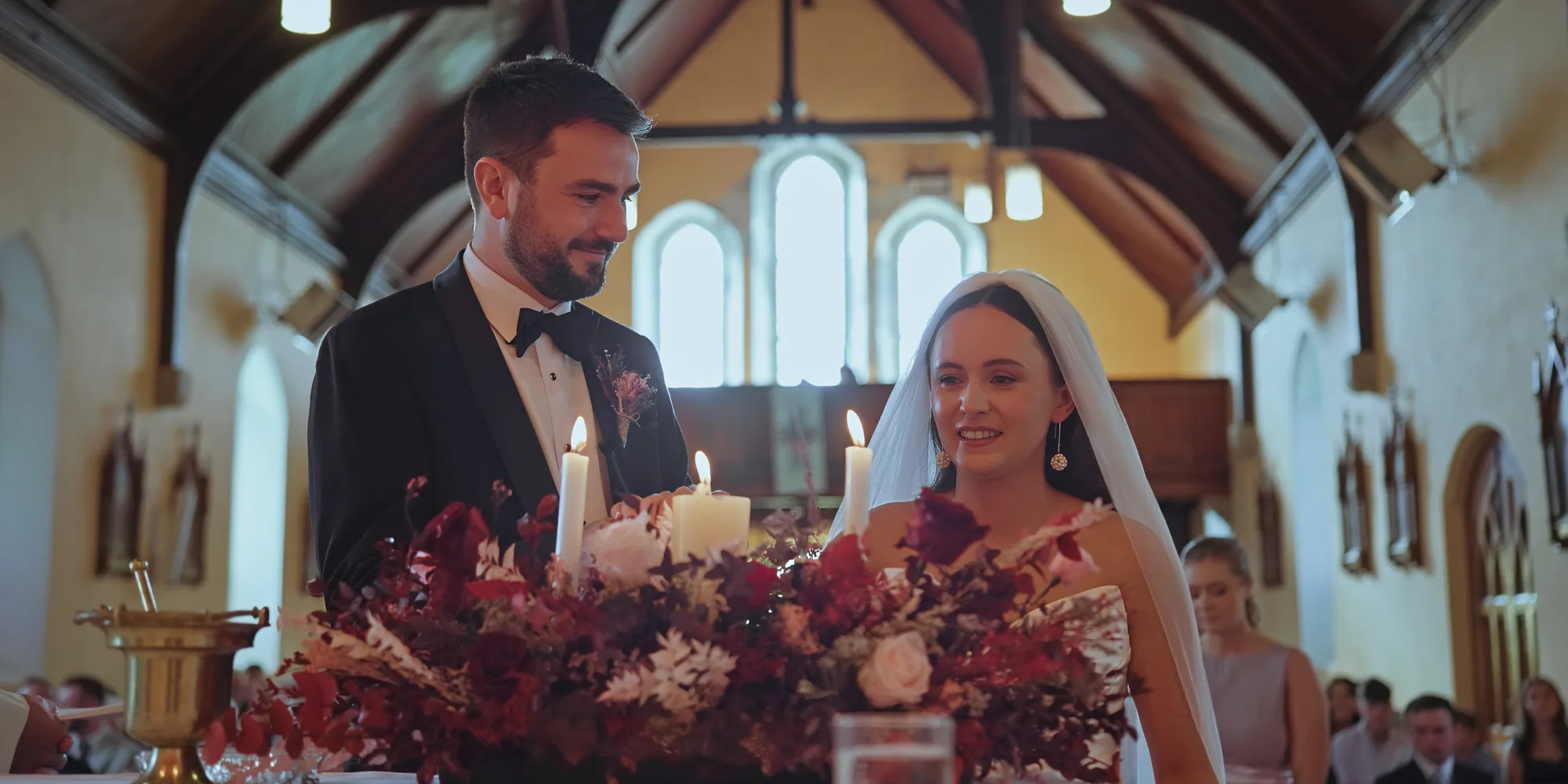
In a five minute film the ceremony takes somewhere between fifty seconds and two minutes. Not because it is the longest part of the day, but because it is the part everything else points at: the morning leads into it, the speeches argue with it, and the dancing is a reaction to it.
Which is why it gets filmed properly, from more than one position, with microphones. A film with a beautiful opening and a ceremony you cannot hear has its priorities in the wrong order.
Vows and speeches are the dialogue
The lines that carry a wedding film are almost never the spectacular ones. They are the sentences people say after they have stopped performing.
Five things make a line usable: you can hear it, it is short enough to breathe, it does not explain what the picture already shows, there is a real person inside it, and it lands without music shoving it along.
Not every speech has five. Some have one, and one is enough if it arrives in the right place. Which is a decision made at a screen at eleven at night, three months after the wedding.
Music is chosen before the cutting
The track comes first, not last. Instrumental, usually, because lyrics fight speech, and because a song with words tells an audience what to feel while a parent is already doing it better.
Then the edit is cut to it, and the music dips under a vow before lifting after. It is the one trick almost nobody notices, which is how you know it worked.
What gets left out
The group photographs. The receiving line in full. Anything that happened twice. Anything where somebody is looking at the camera waiting for permission to stop.
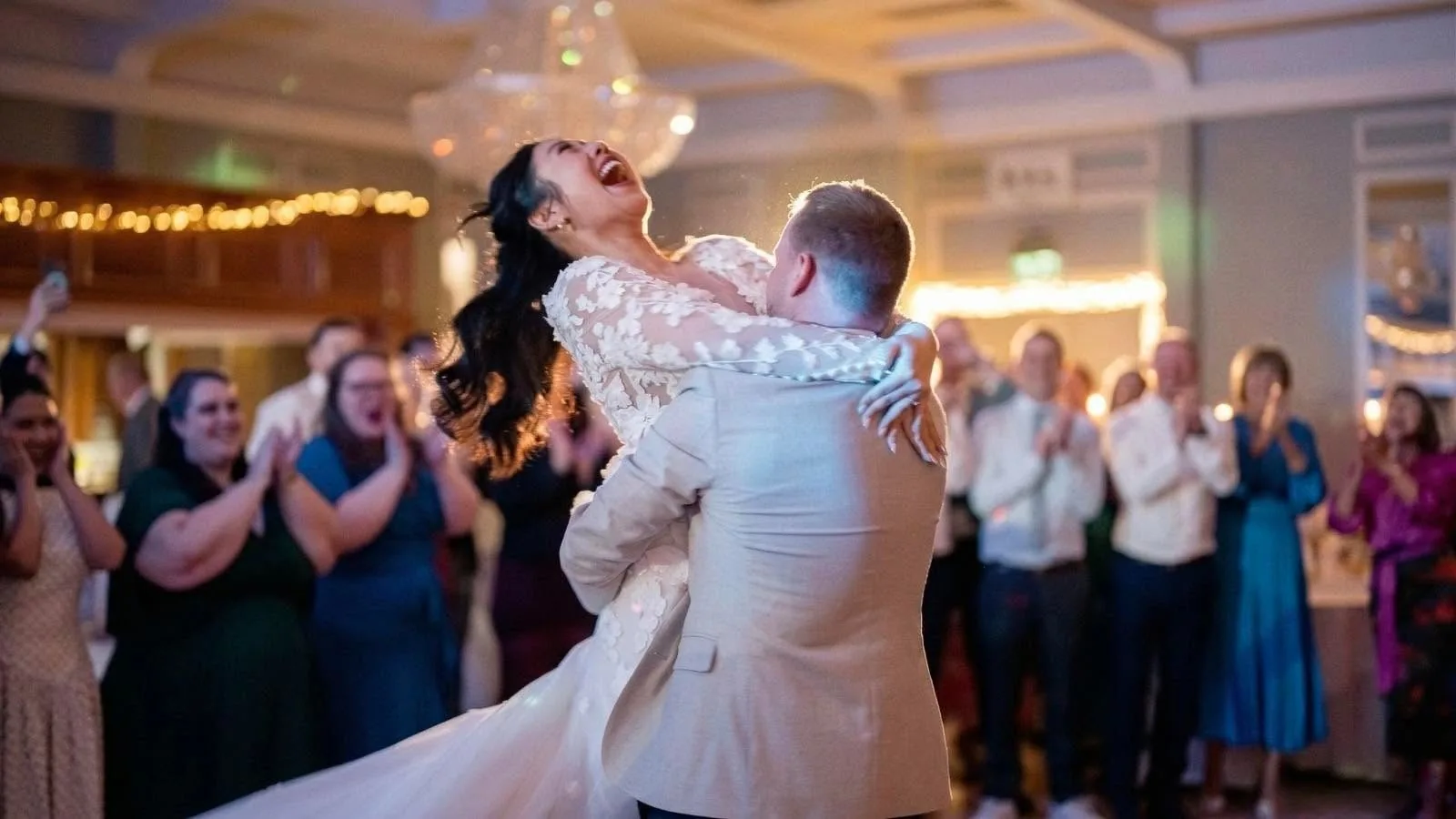
And most of the dancing, which is the part couples think they want and the part that looks the same in every film ever made. Fifteen minutes of it is generous. Three is often enough.
Vertical, immediate,
a little nosy.
We film wedding content on pocket cinema cameras, from morning preparations until the dancing. Short, vertical pieces with the glances, voices and dance-floor evidence that tend to travel first.
See wedding content creationThe technical half
A film built this way needs a lot of material: two or three cameras on the ceremony, several audio recordings of every speech, drone, gimbal, and a second angle on anything that might matter later. We have filmed over two hundred weddings in Ireland since 2020 on Sony cinema bodies, and nothing has been lost in that time, because everything is duplicated onto separate drives before an edit begins.
The edit is where the time goes. A properly built highlight is somewhere between seven and forty hours of work depending on how much arguing the material does with you, and the film arrives about three months after the wedding. Nobody has ever asked for it back faster once they have seen what the time was for.
When it is finished it lives on a page of its own with the film, the full speeches and the highlights, downloadable and shareable. It is the thing we are proudest of and the easiest thing to show rather than describe, so the link is there.
The honest answer
A wedding day does not contain a story. It contains the material for one, and the film is somebody deciding which ninety seconds of it matter.
That decision is the job. The rest is a camera and a hard drive.