Wedding Videography5 min read
Documentary wedding films
Documentary is the most overused word in wedding video and the easiest to test. Either the day was observed, or it was arranged for the camera. You can tell inside a minute.
Unposed days, in Ireland, filmed as they happened.See the work
Somewhere in the last ten years every second wedding film became a documentary. The word sells. It suggests truth, no poses, a filmmaker who disappears. Very little of what is sold as documentary actually is, and it is not hard to spot once you know what to look for.
Here is what it means when we say it.
The day is not arranged for us
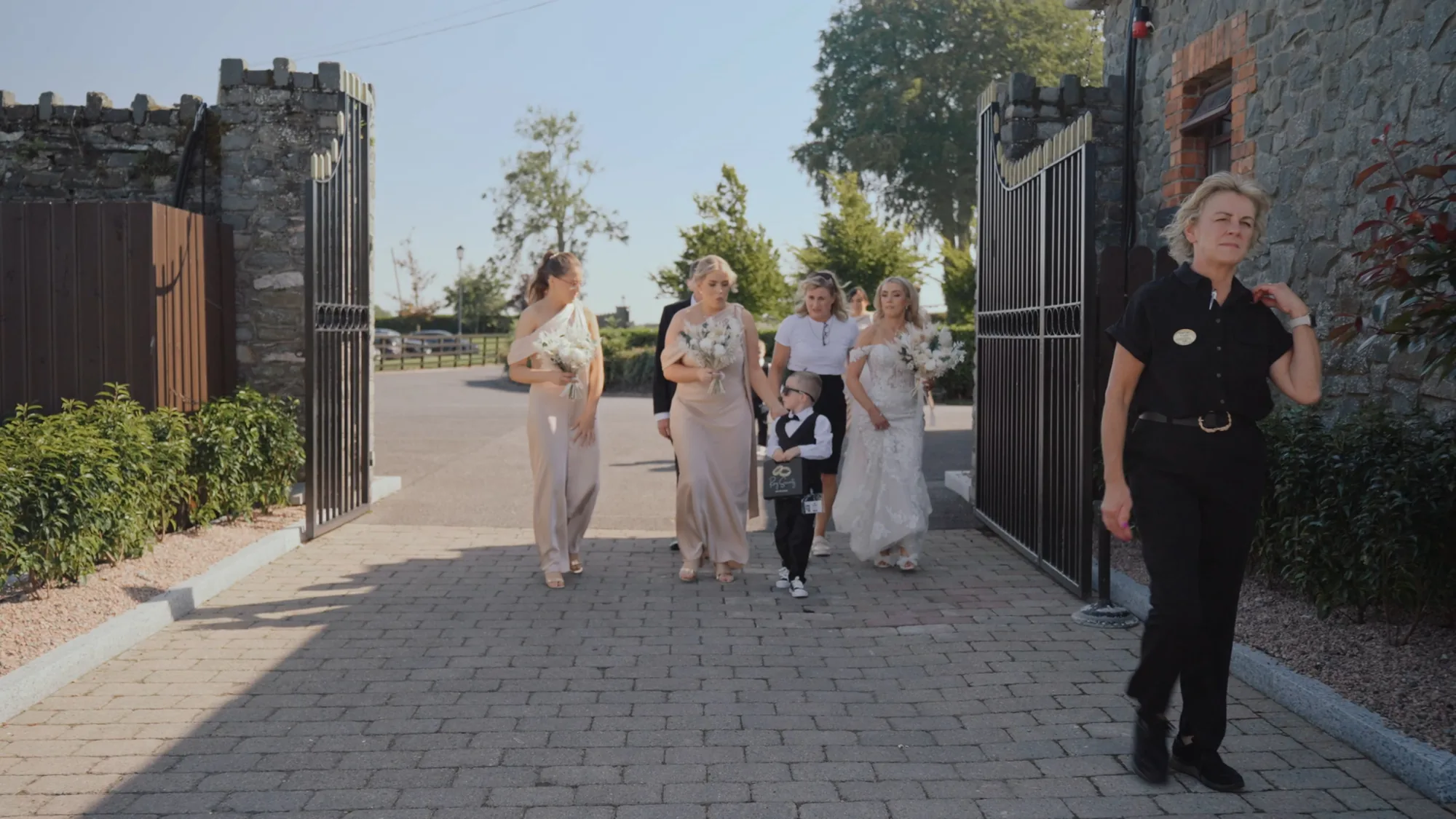
A documentary film follows the day as it happens. Nobody is told where to stand. Nobody repeats a kiss. If a child runs in during the vows, the child is in the film.
The exception in our work is portrait time: twenty minutes in the afternoon when the two of you are asked to walk somewhere and stand in the light. That part is directed, and we would rather say so than pretend otherwise.
Everything else is filmed while you are busy living it, which is also why we ask so little of you.
Ten weddings,
viewed properly.
There is confetti, a dog underfoot, a small committee of Irish wolfhounds and two grooms making a run for it. Press play and put the sound on. The still frames only get you so far.
See the full gallery


Sound is the difference nobody notices until it is missing
A music-only film can be beautiful and still not be documentary. Documentary means you hear the room: the celebrant, the vows, the speech where somebody loses the sentence halfway, the laugh from the back.
That is why we put microphones on people, and why there are several recordings of the same two minutes. A sentence survives a failed PA, a dead battery or a room full of cutlery if it was captured three ways.
Where the label gets stretched
Two things get called documentary that are not. A three minute music-led cut from a wedding day is a highlight, and the label does not change what it is. And a film where somebody is asked to walk towards the camera for the fourth time is a directed film with a documentary title.
In fairness the line is genuinely blurry, and filmmakers argue about it in public. One argument is that a wedding can never be fully documentary because the couple know the camera is there. The other is that you cannot pose a speech, so the parts that matter are unposed whatever you call the film. Both of those are true at once, which is why we describe what we do rather than defend a word.
What it asks of you
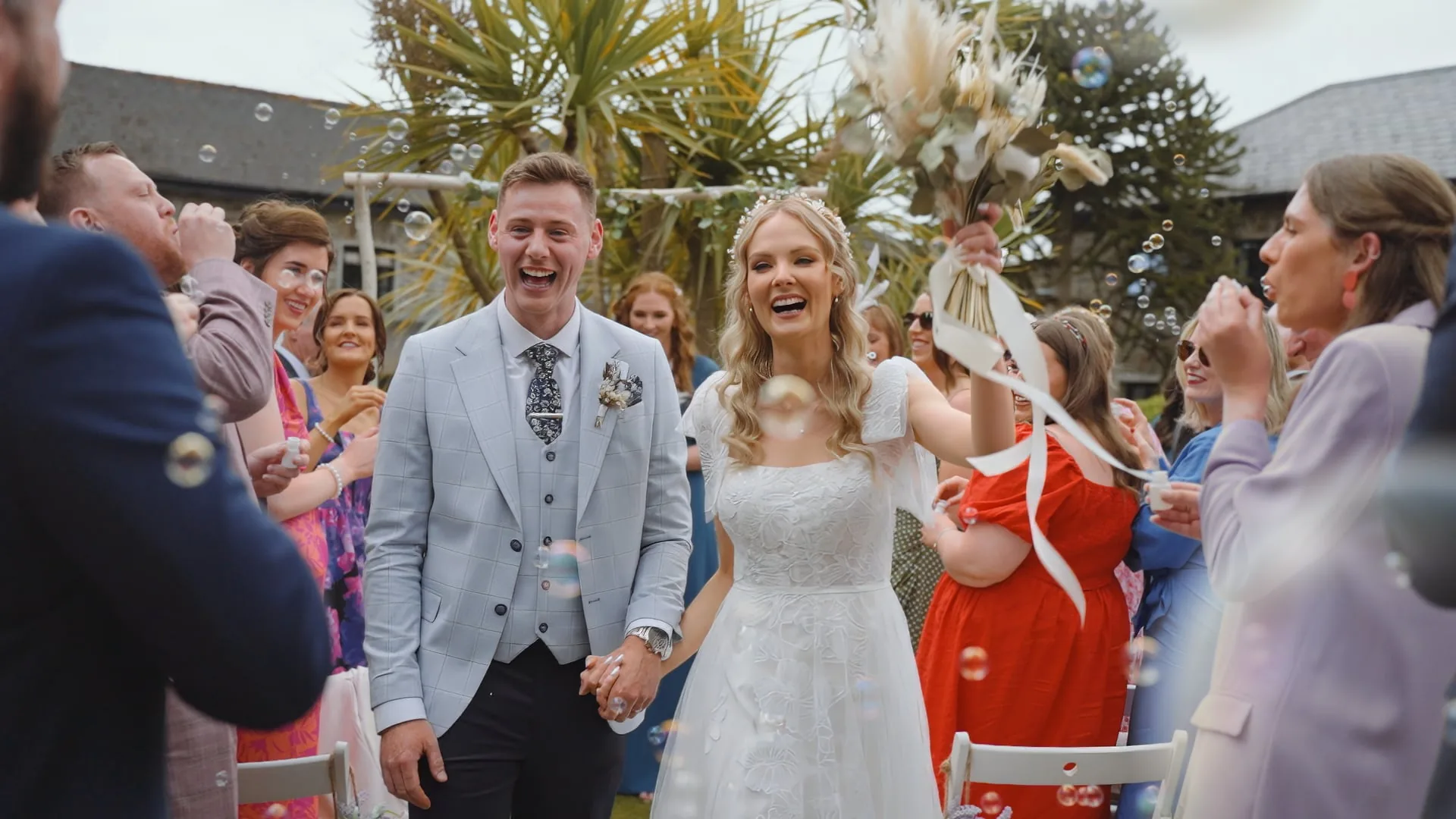
Not much. You do not need to be comfortable on camera, because for most of the day nobody is asking you to be. You need to be willing to be ignored, which is easier than it sounds when there is a wedding happening.
The one thing worth telling us in advance is anything you do not want filmed. A family situation, a person who should not end up in the background of a frame, a part of the day that is private. We would rather know in March than find out in an edit.
The technical half
Documentary coverage in Ireland is mostly a light and sound problem: dark churches, hotel function rooms, candlelight, wind on a headland. We film on Sony cinema bodies with DJI gimbals and drones, and we carry more audio than looks reasonable, because the room is the thing you cannot re-shoot.
We have filmed over two hundred weddings in Ireland since 2020. In that time we have never lost footage: everything is copied onto separate drives before it goes anywhere near an edit. The film itself takes about three months, and when it is done it is not a file in an email. It is a page of its own with the film, the speeches and the highlights on it, downloadable and shareable, so your family can watch it without an account or a password.
Vertical, immediate,
a little nosy.
We film wedding content on pocket cinema cameras, from morning preparations until the dancing. Short, vertical pieces with the glances, voices and dance-floor evidence that tend to travel first.
See wedding content creationThe honest answer
Documentary is not a style you add in the edit. It is a decision about how the day gets filmed, and it either happens in the room or it does not.
If a film has no vows in it, no speeches and nobody talking to anybody except the camera, it is not a documentary. It is a montage with good music, which is a fine thing to want, as long as it is what you think you are buying.