Wedding Videography4 min read
Vertical wedding video
A vertical cut is not your film turned sideways. It is a different frame, and it has to be filmed with that in mind or it looks like a mistake.

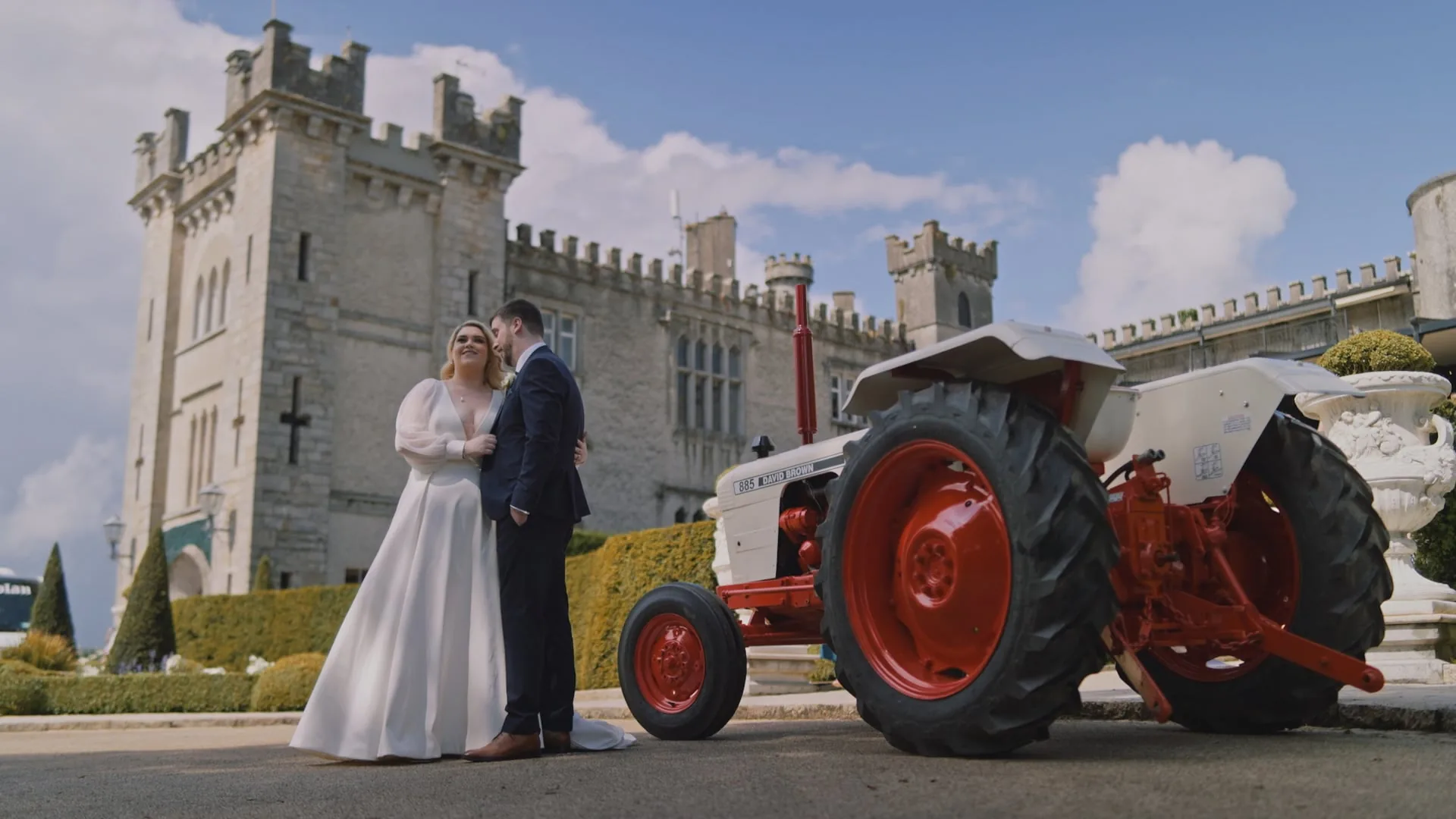
The same day, framed for a hand instead of a wall.See the work
Every videographer now offers a vertical cut. Most of them are made by putting a horizontal film in a vertical hole and hoping nobody looks at the edges.
The arithmetic first
A 1920 by 1080 frame cut to nine by sixteen gives you a window about 608 pixels wide. From 4K it is roughly 1,215 by 2,160. Either way you keep about a third of the picture and throw the rest away.
Which means a two shot of the couple, arms around each other, cannot survive it. There is no vertical frame that contains both faces and the bouquet unless somebody planned for that at the time.
So it is composed vertically on the day: one person, or two stacked with a wall behind them. Our content work is filmed that way from the start. The vertical cut of a film is a second angle, not a crop of the first.
The parts you cannot put anything in
Platforms cover the edges. Roughly the top fourteen per cent, the bottom thirty-five per cent and six per cent either side, which on a 1080 by 1920 frame is about 269 pixels at the top, 672 at the bottom and 65 at each edge. Shorts are tighter again: 288 at the top, 672 at the bottom, 48 and 192 at the sides.
Put a face at the bottom of the frame and a caption will sit on it. Put anything important at the top and the platform's own interface eats it. Those numbers are published for ads rather than for wedding films, and they move when the apps update, which is why we treat them as margins rather than laws.
Ten weddings,
viewed properly.
There is confetti, a dog underfoot, a small committee of Irish wolfhounds and two grooms making a run for it. Press play and put the sound on. The still frames only get you so far.
See the full gallery


Sound for a speaker the size of a stamp
A phone speaker has no bass, so a mix built for a living room sounds thin and shouty in a hand. The mids have to carry, which means the voice, the strings and the applause, and not the sub bass that made the edit feel cinematic on a laptop.
It has to work in mono too. A lot of people watch with one earbud in, or through a speaker that only does one channel, and a delicate stereo spread collapses into something worse than plain.
Why this is not the same as content
Content is a separate shoot: a person moving through the day filming short pieces as they happen, delivered fast. A vertical cut is your finished film re-framed for a hand, and it arrives with the film.
Both are vertical. One is a service, the other is a format, and the difference matters when you are reading a quote.
Vertical, immediate,
a little nosy.
We film wedding content on pocket cinema cameras, from morning preparations until the dancing. Short, vertical pieces with the glances, voices and dance-floor evidence that tend to travel first.
See wedding content creationThe honest answer
Vertical is not a lesser format. It is a harder one, because there is less room to hide a bad decision in.
If a videographer shows you a vertical cut that is all foreheads and door frames, they cropped it. If it has one person in it and you know exactly where to look, somebody thought about it on the day.