Choosing Coverage6 min read
How we film wedding content
A vertical frame in a dark room, with sound that has to survive two hundred guests. That is the actual job, and it is where content stops being a phone and starts being a camera.

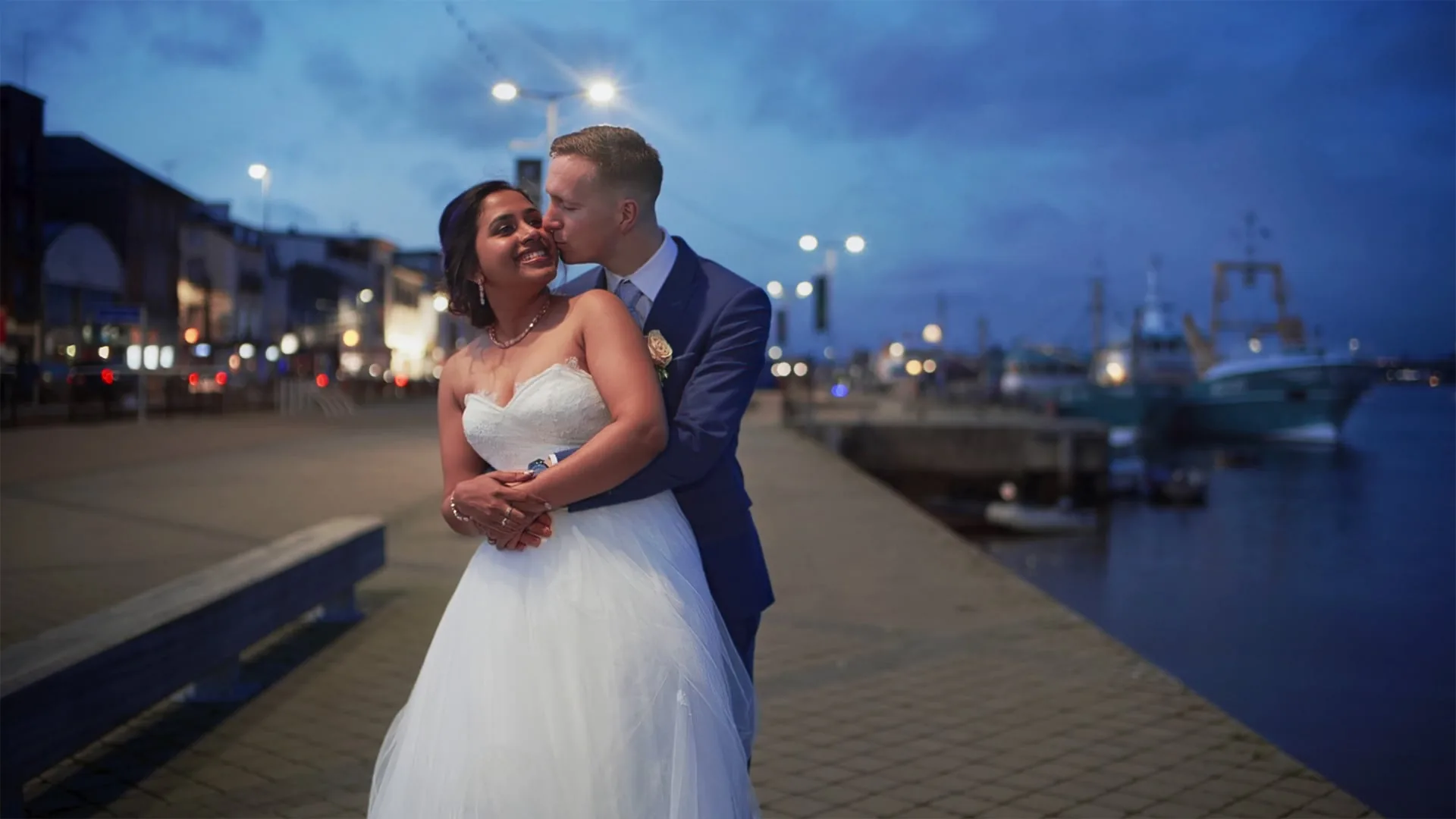
Low light, close sound, vertical framing.See the work
Content is usually described by what it looks like: short, vertical, fast. Almost never by how it is made. Which is a shame, because how it is made is the only reason to hire anyone for it.
The vertical frame is not a crop
A horizontal frame holds a room. A vertical frame holds a person.
Take a horizontal shot and cut the middle out of it and you get a strip. From a 4K frame that is about 1,215 pixels wide by 2,160 tall. From a 1080p shot it is nearer 608 pixels wide, stretched back up to fit a phone. It looks soft because it is.
So the frame is composed vertically, which changes what is possible in it. One person, or two people stacked with a wall behind them. Headroom becomes a decision. In a wide shot, the hands tell you more than the faces do.
Vertical, immediate,
a little nosy.
We film wedding content on pocket cinema cameras, from morning preparations until the dancing. Short, vertical pieces with the glances, voices and dance-floor evidence that tend to travel first.
See the full galleryThe room is the problem
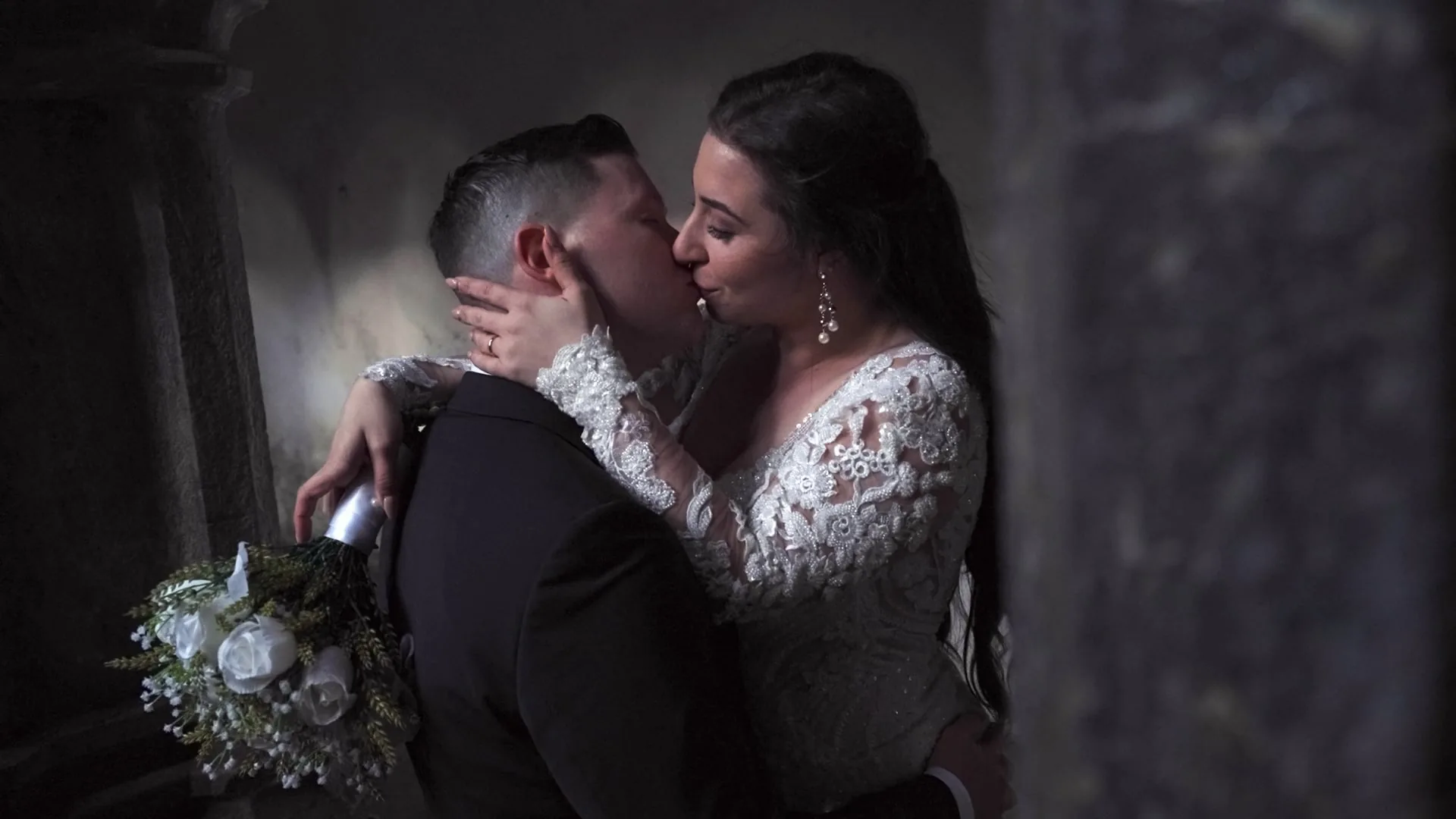
A hotel function room at six in the evening in November sits somewhere between five and fifteen lux. A bright day outside is fifty thousand to a hundred thousand. That gap is the whole job.
We open the aperture first, and only then lift the ISO, because there is a point on a cinema sensor where the second base gain kicks in and 12,800 stops being mush. A small camera at that number produces a smear of colour. That is the difference the money buys, and it is invisible until the lights go down.
Then we add light, carefully. Small panels at three thousand to three thousand two hundred kelvin, run at fifteen to twenty per cent, bounced into a wall or a ceiling rather than aimed at a face. Aimed light looks like a headtorch, and a headtorch ruins a room.
Sound is half of it
A clip of a speech that sounds like a room full of chairs is not a clip anyone watches twice, however good it looks.
So there are three recordings where we can get them. The desk feed from the venue's PA, if the venue will give it. A small recorder hidden on the top table. And a lapel microphone on the speaker, ten centimetres below the chin rather than clipped to a jacket that moves every time they breathe.
Stone churches are their own problem. The reverb is a second or more, which drags one sentence into the next. Close microphone, quiet room, and no air conditioning unit humming forty feet away.
Why we know any of this
Because we learned it making wedding films. Same framing, same exposure, same microphone placement, same habit of watching what is about to happen rather than what just did. Content is a vertical format, not an amateur one.
What it asks of you
Twenty minutes of your day, in pieces. A walk somewhere with the light behind you. One shot with the bridesmaids shouting. Nothing that needs a tripod and a countdown.
Everything else is filmed while you are busy doing something else, which is exactly the point of content creation and the reason it survives being watched later.
Ten weddings,
viewed properly.
There is confetti, a dog underfoot, a small committee of Irish wolfhounds and two grooms making a run for it. Press play and put the sound on. The still frames only get you so far.
See wedding videography


The honest answer
Vertical, in low light, with clean sound is a harder job than it looks from the outside. It is why our content is shot on the same cameras as the film, by the same two people, and why we do not offer the cheaper version.