Choosing Coverage5 min read
Getting ready, ceremony and reception content
Content is not filmed in one burst. It is filmed in the gaps between the parts of the day you have planned, which means every part needs a different approach.
Morning, ceremony and nine o'clock, as it happened.See the work
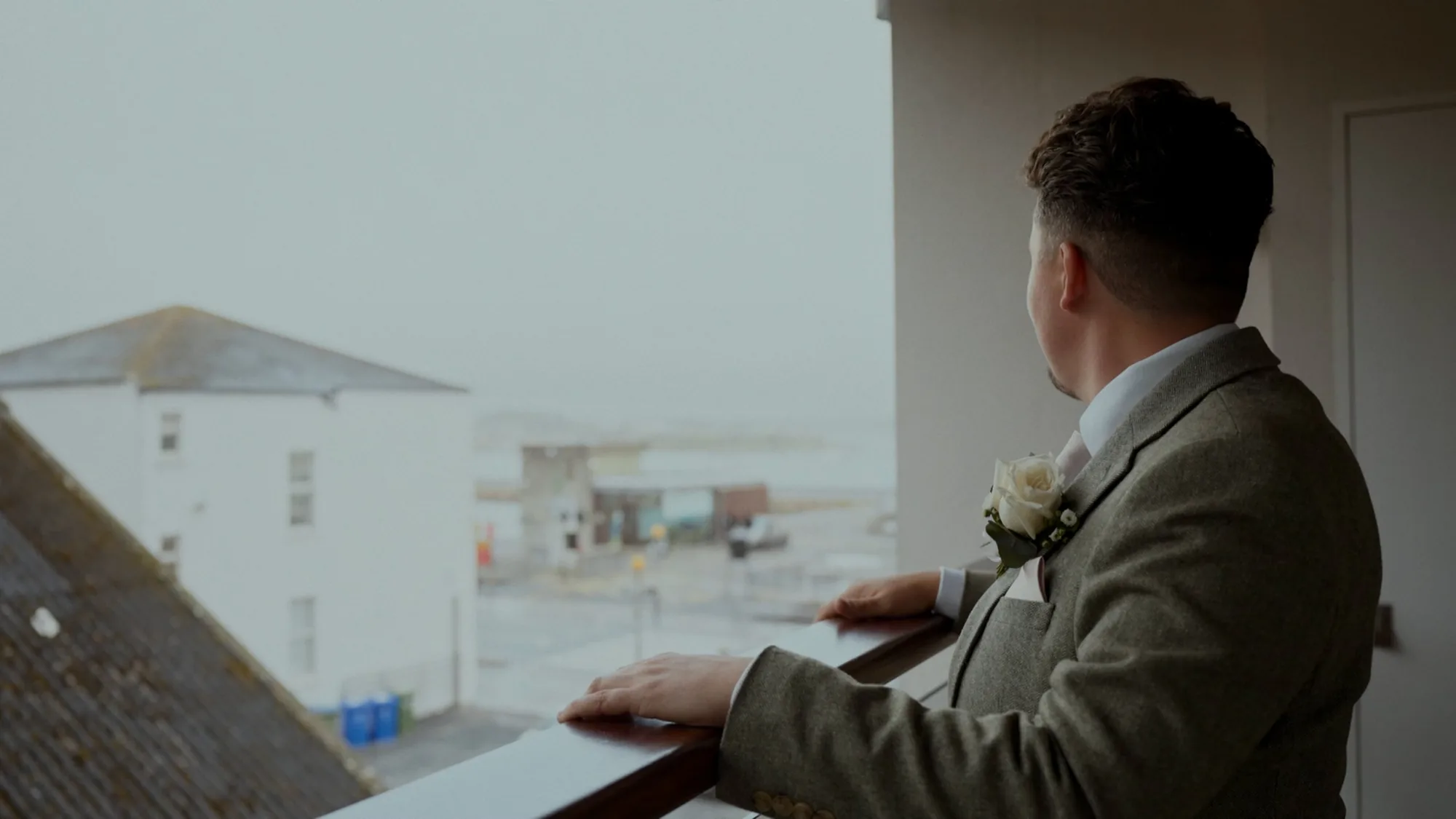
The morning is the only part of the day where nothing is scheduled and everything happens: the dress, the cards, the mother, the bridesmaids arriving in stages, and the last twenty minutes when everyone looks at a clock at the same time.
We arrive two to three hours before the ceremony
That sounds early until you count what is in it. It also buys the thing that makes content worth watching: the boring middle. Somebody doing up a shoe. A father reading a card twice. The room before it fills.
The rule is that nothing gets re-staged. If a moment happened before we were in the room, we film something true instead of asking for it again. A re-staged button is a clip you can feel.
Vertical, immediate,
a little nosy.
We film wedding content on pocket cinema cameras, from morning preparations until the dancing. Short, vertical pieces with the glances, voices and dance-floor evidence that tend to travel first.
See the full galleryThe ceremony is positional
Everything is placed before the first guest sits: one camera at the back for the wide shot and the walk in, the others inside the rail or along a side wall, and then no movement at all.
There is no national rule in Ireland about where a camera may stand. The parish decides, and parishes differ widely. One Dublin policy forbids the sanctuary, flash, extra lighting, moving a tripod during the ceremony, and any posed repeat. Another asks only that the priest be consulted about position and movement. We ask in writing, before the rehearsal, and we never walk the aisle during the vows.
The reception is a sound problem
The drinks reception is the best content of the day. People arriving at each other, the light going, children running on a lawn in good shoes. Filmed while it happens, and gone in an hour.
Somewhere in that hour we steal people. A grandmother, a group of bridesmaids, the friend who has known the groom since primary school, each for thirty seconds answering the same question. It is the only part of the day where the guests are the subject, and it is why a folder of interviews ends up in every delivery.
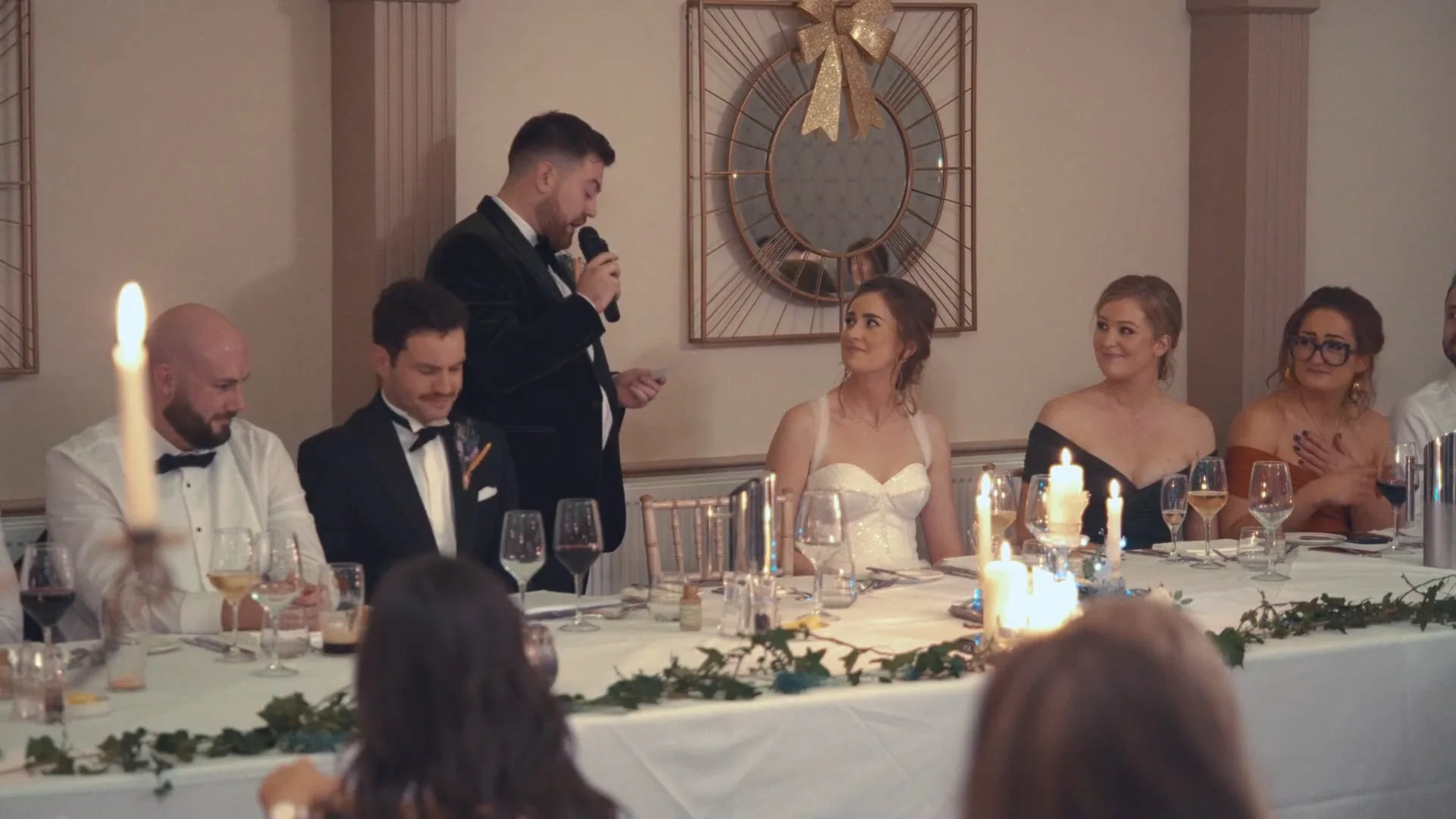
By the speeches the problem is audio, not picture. A ballroom with two hundred guests is a wall of cutlery. So we put a lapel on the speaker, hide a recorder on the top table, take the desk feed from the venue if they will give it, and ask the room to stop serving for ten minutes.
One counter-intuitive request: we ask the venue not to turn the lights up for the speeches. Bright ballroom light looks like a school hall. Dim light at a higher ISO looks like a wedding.
The shape of an Irish day
Two o'clock ceremony, drinks until about five, bell at five, entrance at half five, speeches around eight, first dance around nine. Guests take twenty to thirty minutes to move from one part of a hotel to another, and no timeline believes that until it happens.
Content fits inside that shape rather than adding to it. Fifteen minutes here, ten there, a minute at the bar, the walk between two rooms that nobody put in the plan.
Ten weddings,
viewed properly.
There is confetti, a dog underfoot, a small committee of Irish wolfhounds and two grooms making a run for it. Press play and put the sound on. The still frames only get you so far.
See wedding videography


The honest answer
The parts of the day worth keeping are almost never the parts people plan for. Which is why the coverage starts two hours before anything is supposed to happen, and does not stop when the schedule does.