Posing & Portraits7 min read
How much posing do couples actually need?
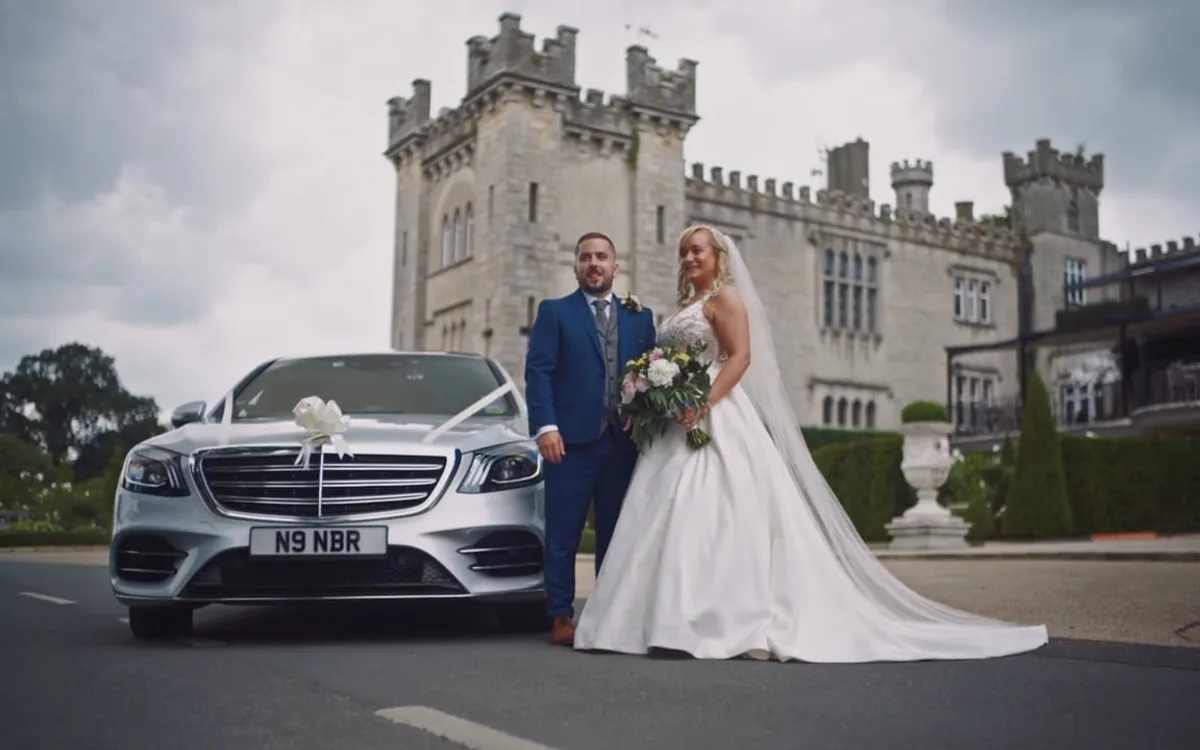
The honest answer is about a dozen instructions, most of them about your feet. The longer answer involves a car park, an aunt near the cake, and why the photograph you end up liking is usually taken four seconds after you stopped performing.
A dozen instructions, a handful of photographs, and the rest of the day.See the photographs
There is a moment after the last family group photograph when the wedding stops being a schedule and becomes a room full of people who want to talk to you. Someone hands you a glass. Your aunt is crying near the cake. And the two of you are standing in a car park with a photographer, waiting to be told what to do with your arms.
That is where most of the fear about posing lives. Not in the photographs. In the ninety seconds before them.
We usually take fifteen to twenty minutes with a couple on their own, once after the ceremony and sometimes again at last light. Inside that window, the number of times we ask you to hold an actual pose is small. Maybe a dozen. The rest is walking, talking, and being left alone with a long lens pointed at you from a distance that does not feel like a camera.
Posing is not the opposite of natural
Online this gets argued as a binary. Posed photographs are stiff and fake; candid photographs are real. We do not think that is the useful line, and it does not match what happens on the day.
A pose is a static set of instructions. Hand here, shoulder there, hold it. The problem is not that it looks unnatural. The problem is that you have to hold it, and holding something makes you think about your elbow.
A prompt is something to do instead. Walk to that gate. Tell her what you said in the car. It is not more honest than a pose, exactly. It just gives your attention somewhere to go, and your attention is the thing that makes a photograph look like you.
A prompt is a pose you forget you are in.
Photographers argue about prompts and poses as if one is a moral position. Both are directions. One asks you to be still, the other asks you to be busy. We use both, in a particular order.
A still gives
you longer.
Wedding photographs for looking at properly. Portraits, atmosphere and the frame beside the obvious one. Some explain themselves immediately. Others are slower, which is useful.
See the full gallery
What we actually do, in order
Feet, then hands
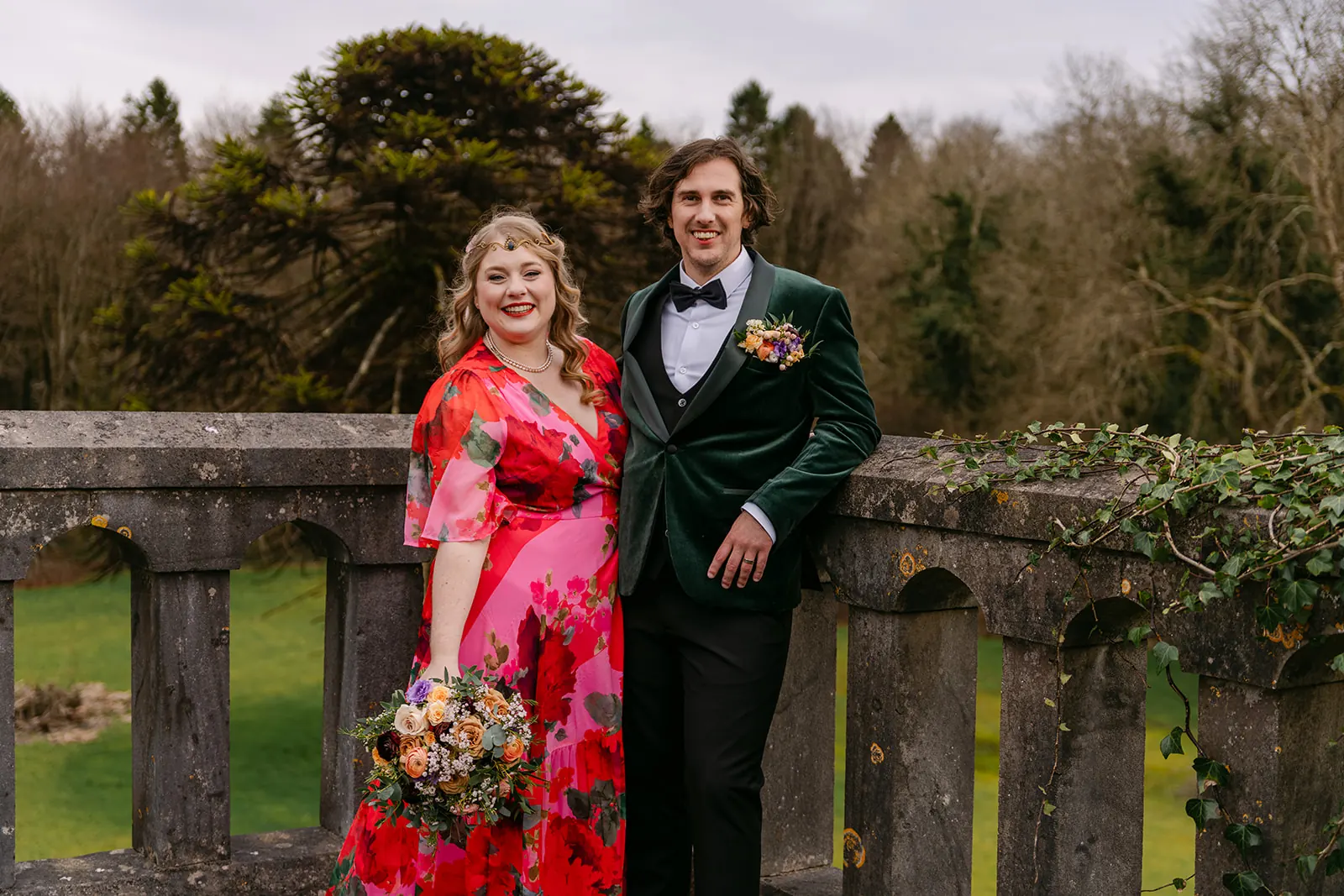
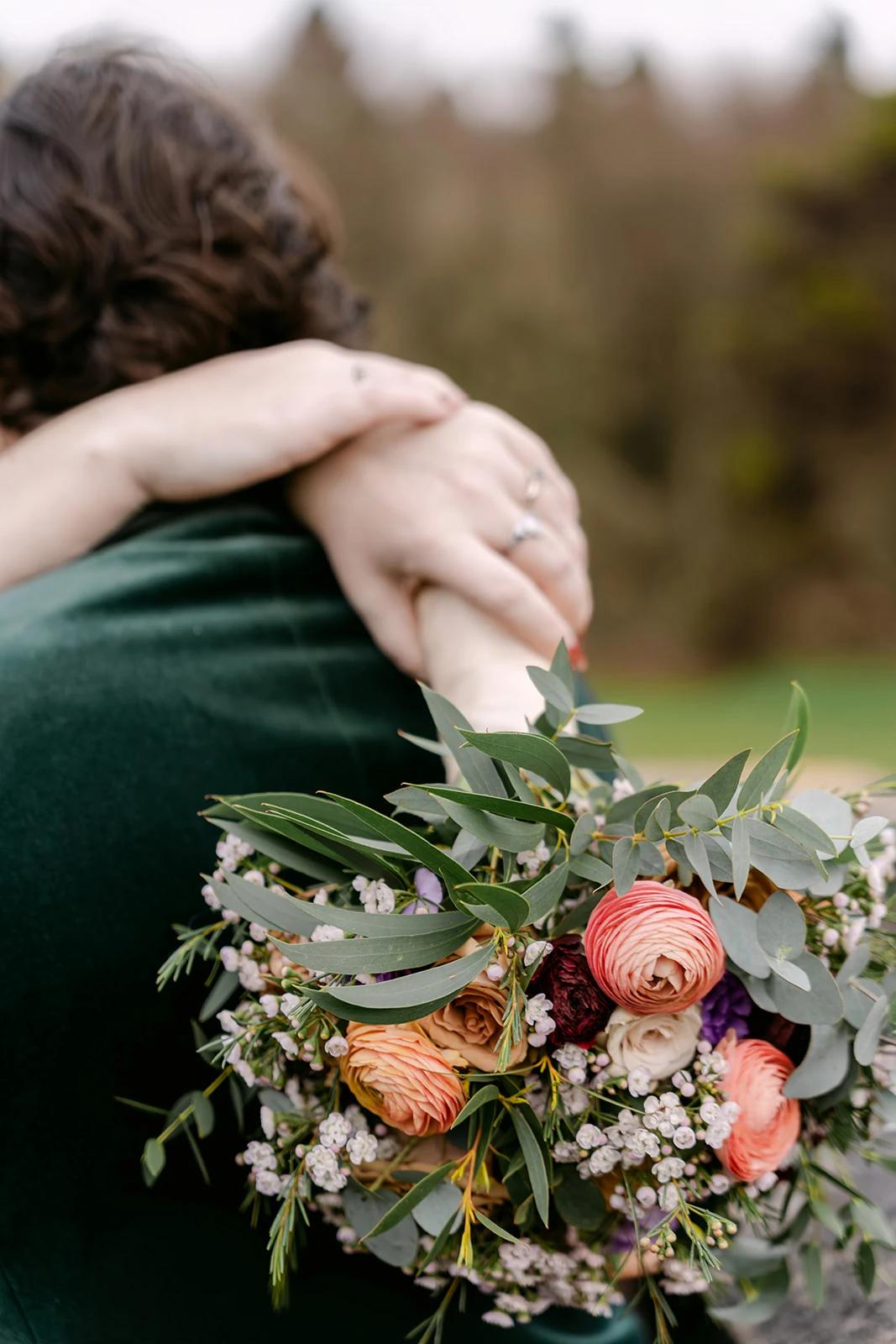
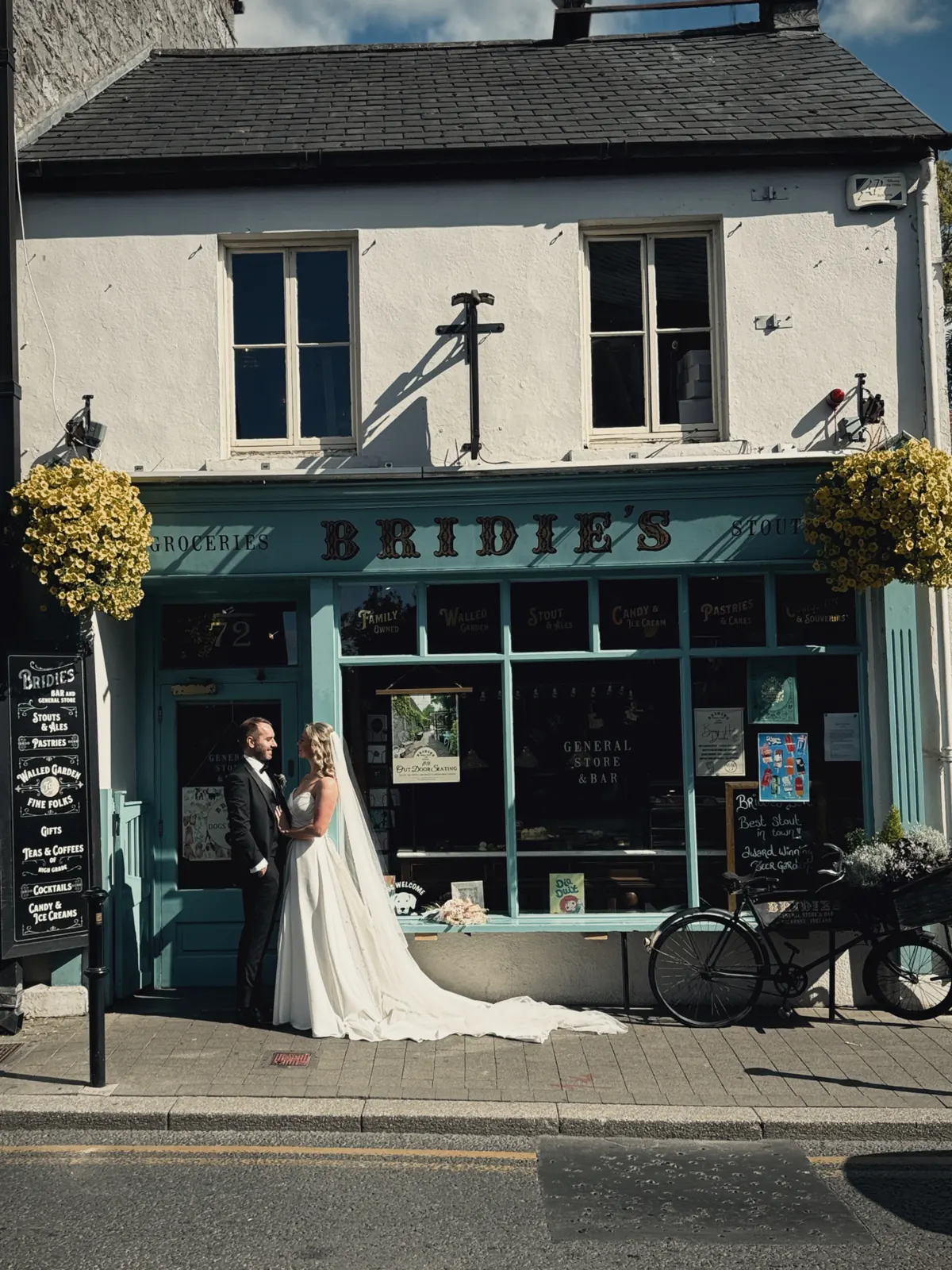
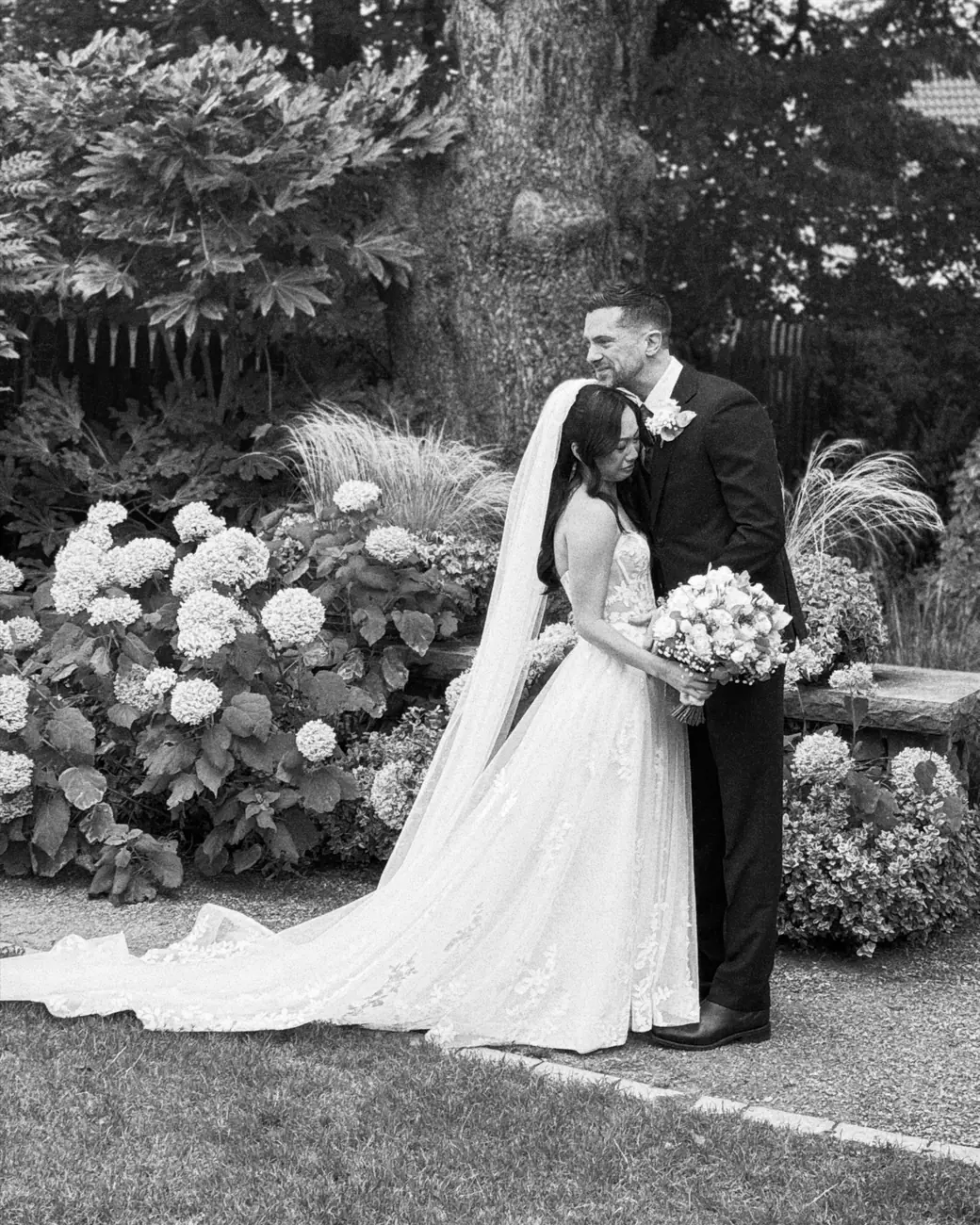
Feet slightly towards each other, weight on the back foot, so you are not standing like you are waiting for a bus. Then hands: put them on each other. Anywhere. It sounds too simple to be an instruction, and it is the single most useful one we give all day.
Then movement
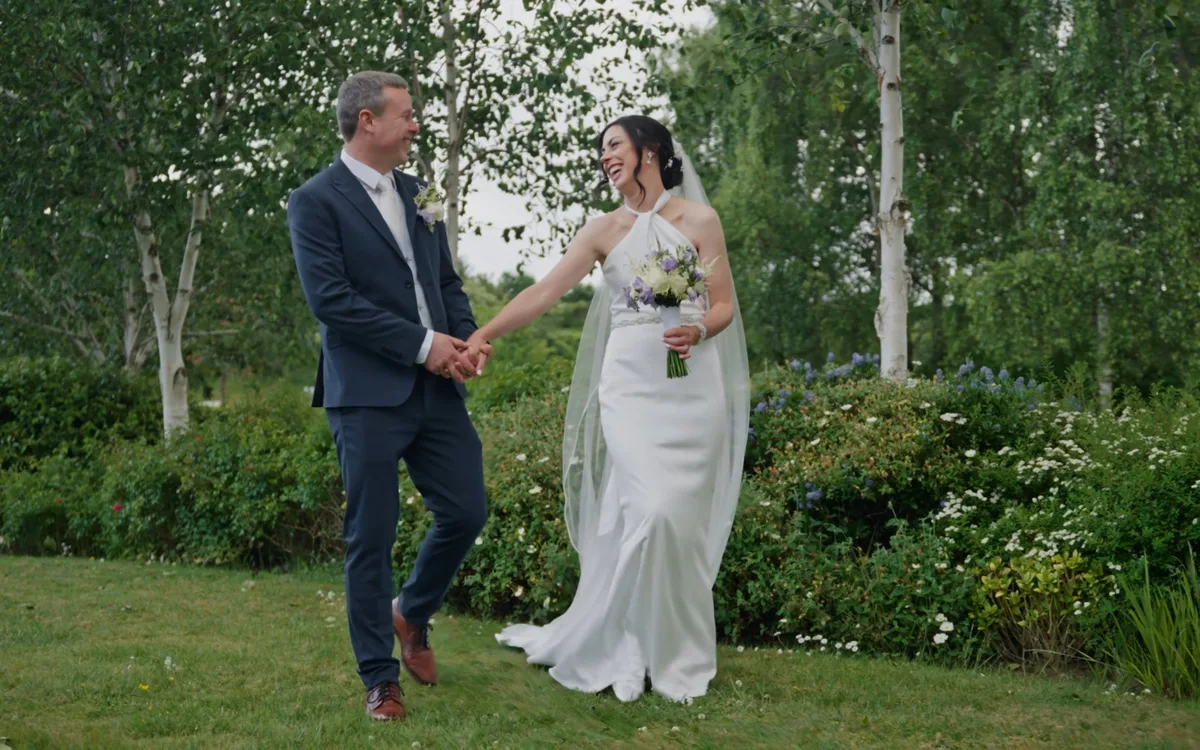
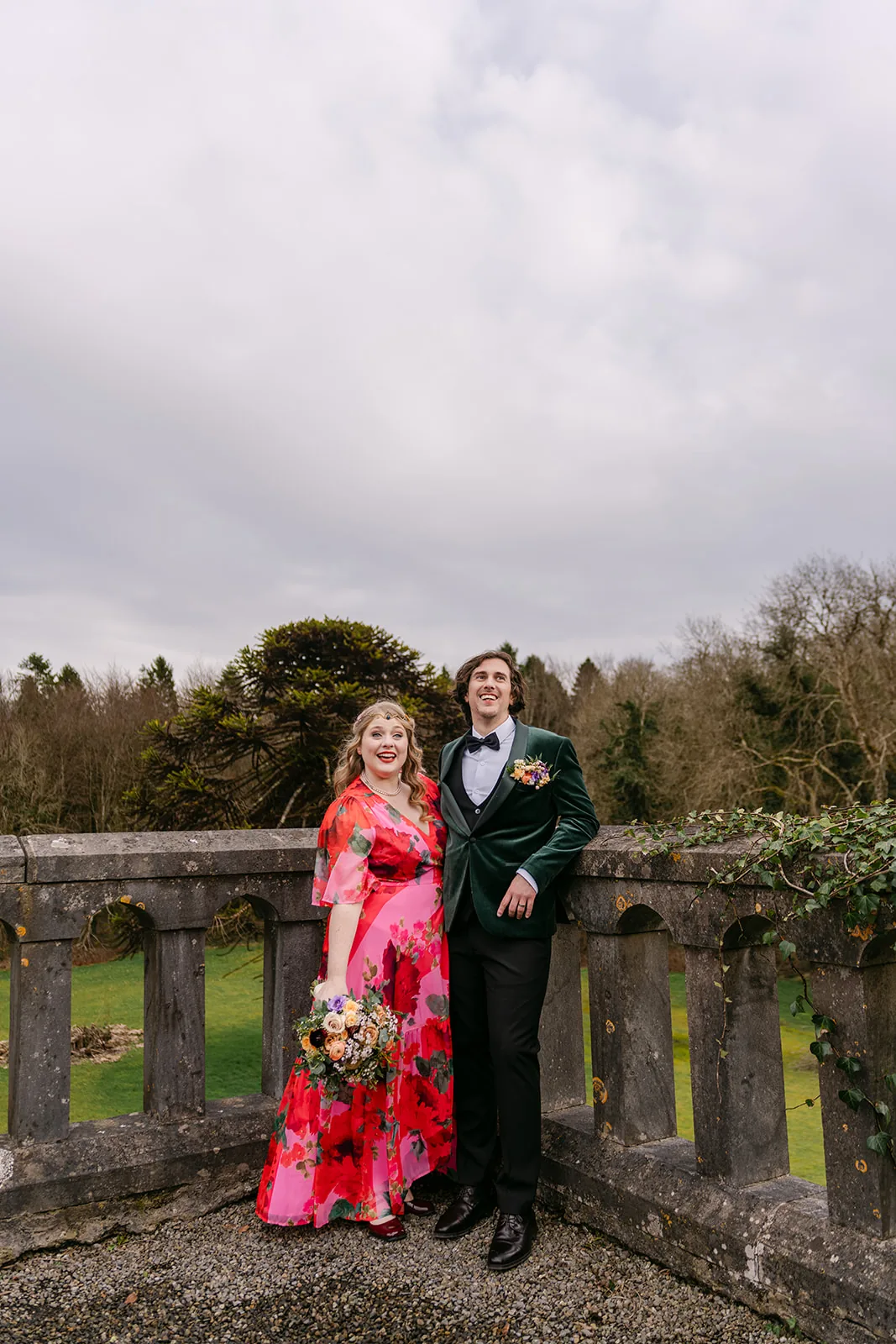
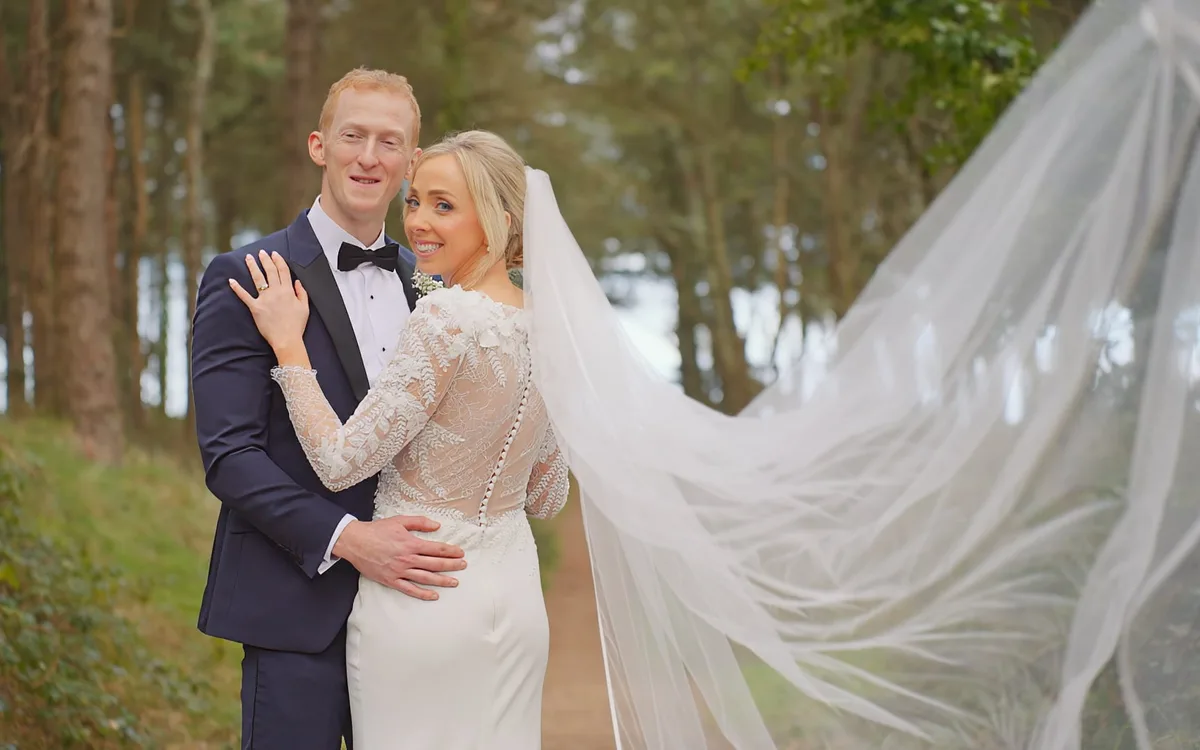
Walking is the best pose in wedding photography and it is not a pose. We ask you to walk somewhere together, then go ahead of you and turn around, and by the time we do you are two people going to a place rather than two people being photographed. Slow is better than fast. Slow is also harder than it looks in heels on gravel, which is fine. The wobble is useful.
Then a prompt, then silence
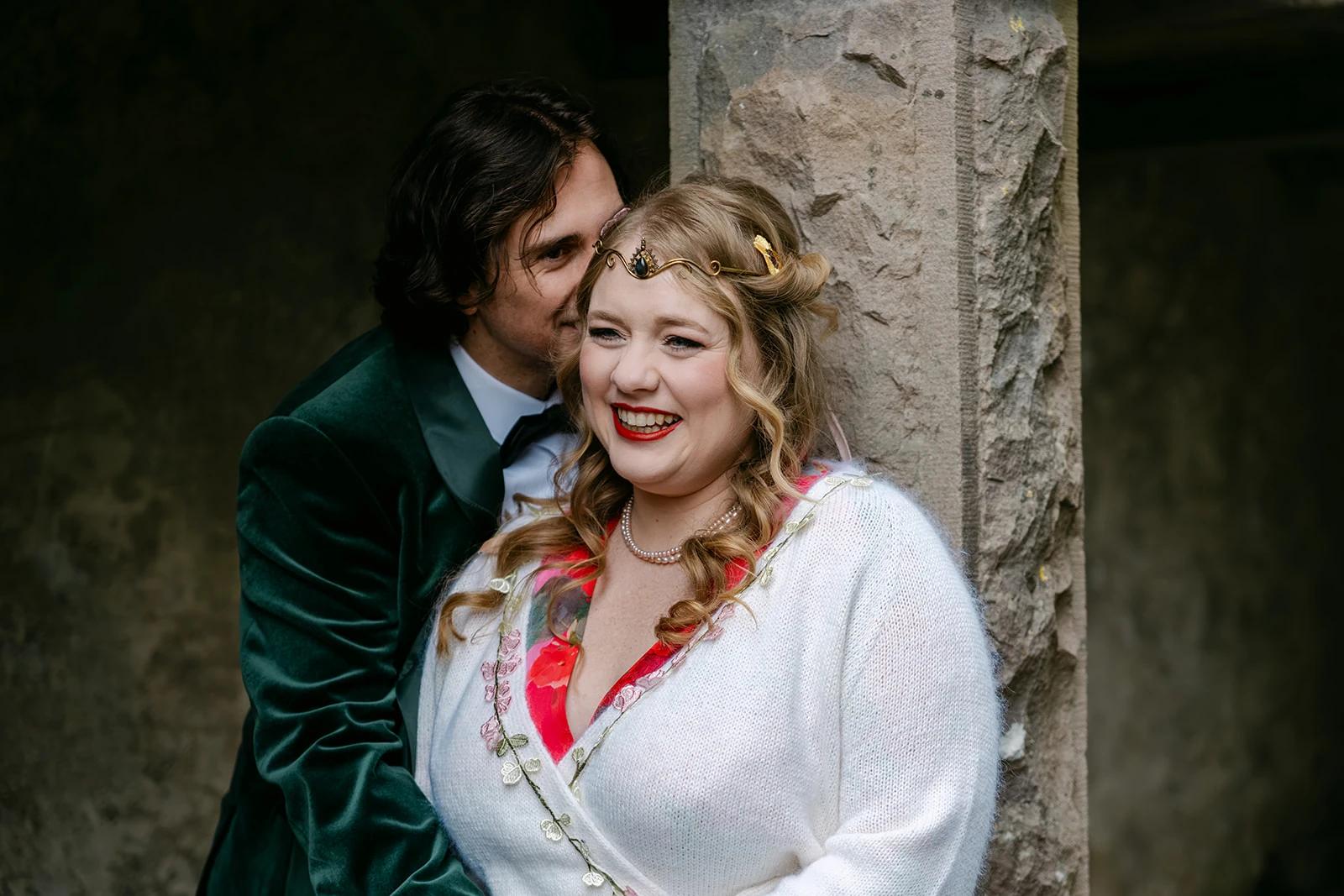
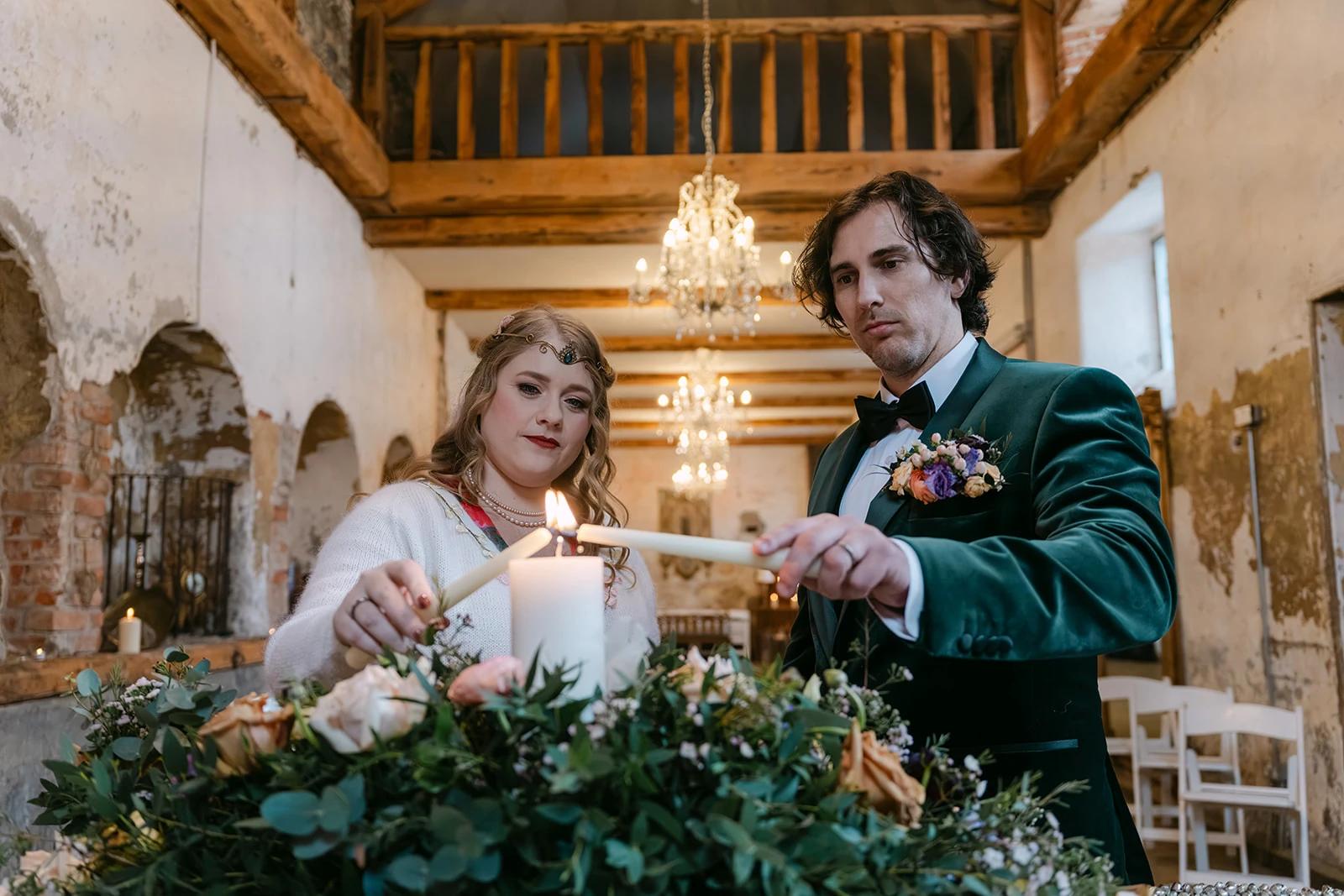
Something short, specific and slightly odd. Then we stop talking. This is the part couples do not expect: after we give you something to do, we say nothing for ten or fifteen seconds. If we keep talking, you keep performing for us. If we go quiet, you start talking to each other, and that is the part worth having.
Then we change one thing
Different angle, closer, further, into the shade. Four or five setups with different emotional weather, not a catalogue of forty poses. If you have seen a photographer work through a list on their phone, this is what that is not.
We are not the same company in a portrait session. One of us talks the whole way through, asking questions, filling the silence because the silence is uncomfortable. The other mostly stops talking, which is the better trick and the more uncomfortable one to watch. Couples relax faster with the quiet one, then admit afterwards that for a moment they thought something had gone wrong.
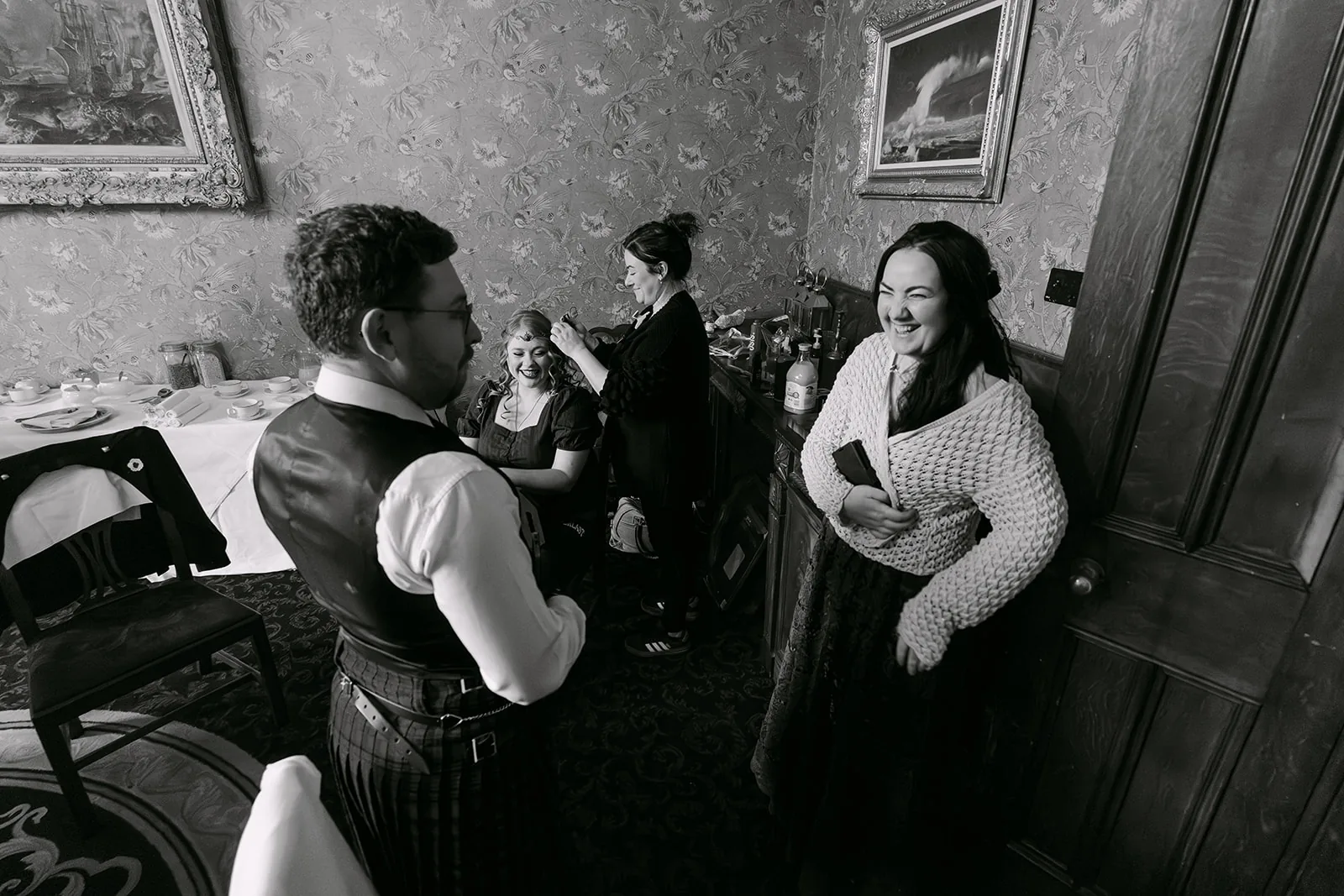
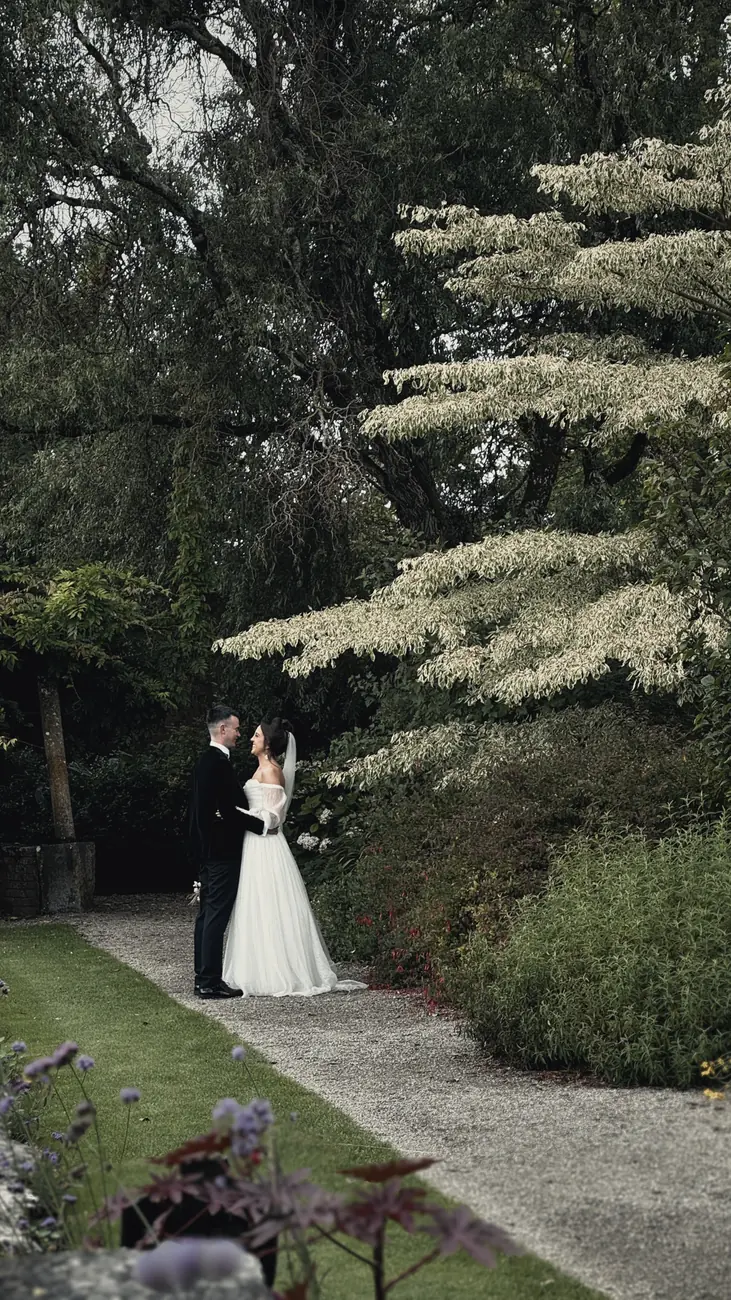
We also shoot portraits long. The further away the camera, the less it behaves like a camera, and there is a second benefit nobody mentions: you cannot hear the shutter. A burst of frames is a small mechanical reminder that you are being documented, and it takes about four seconds afterwards for the shoulders to come back down.
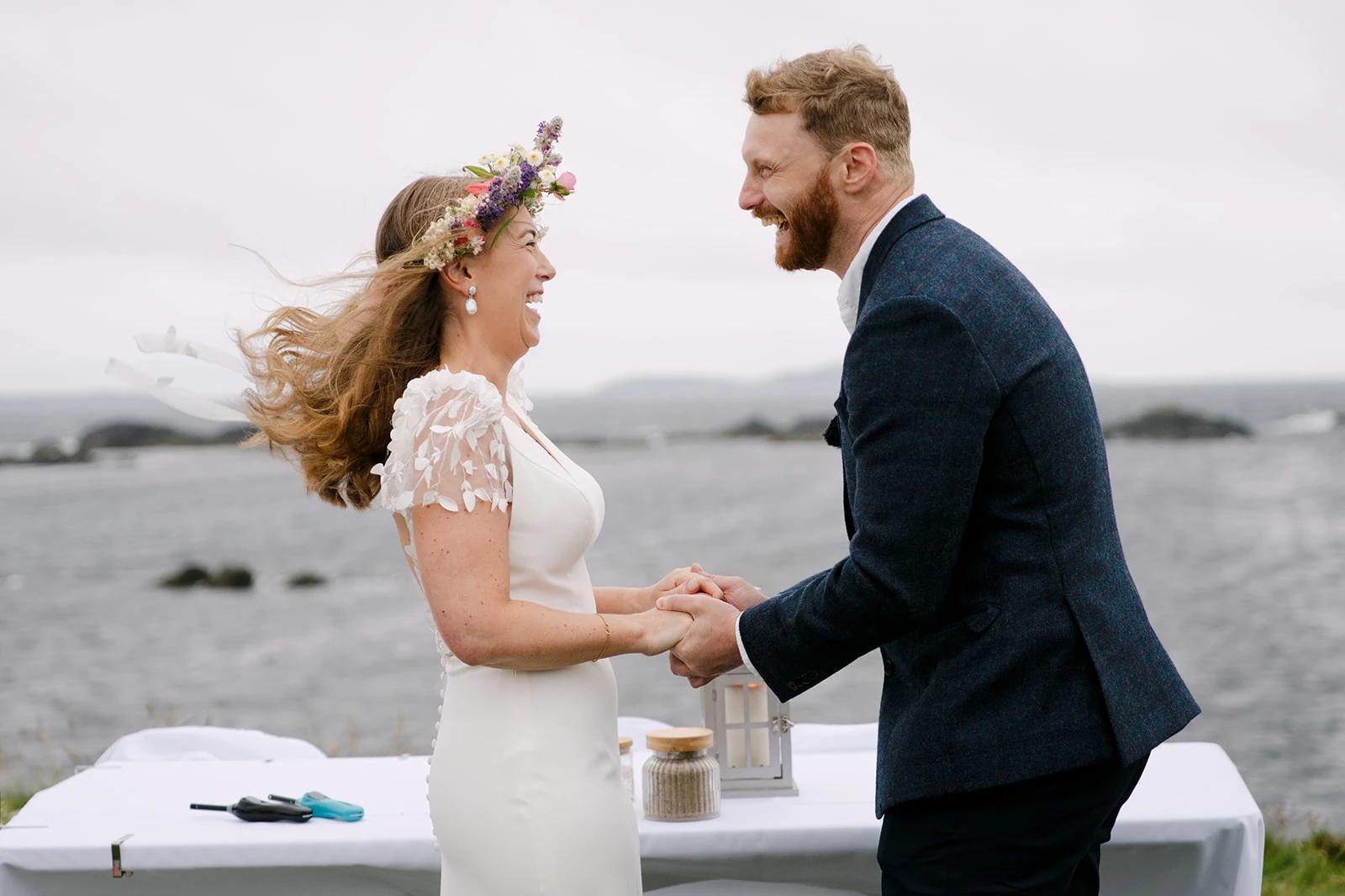
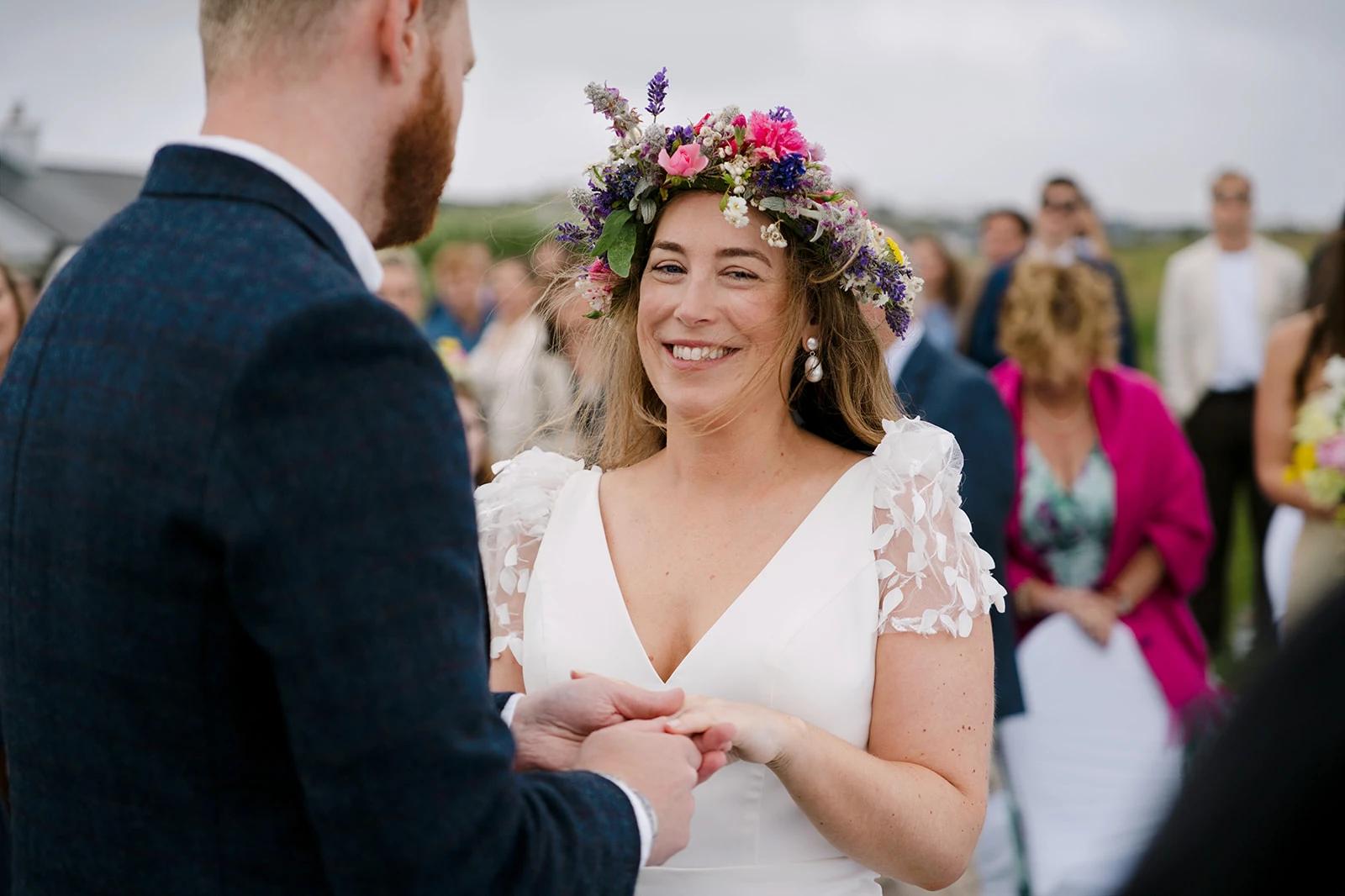
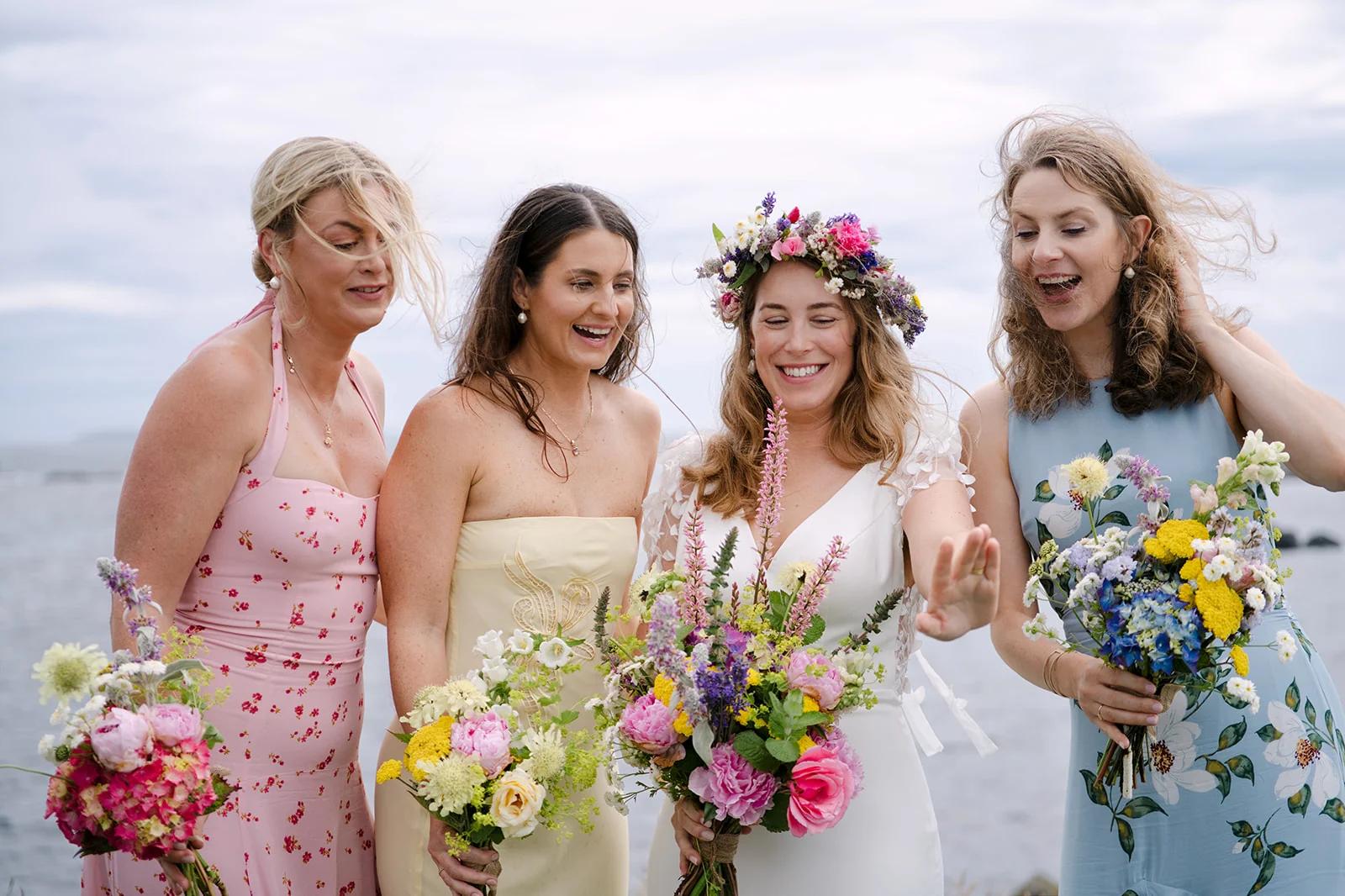
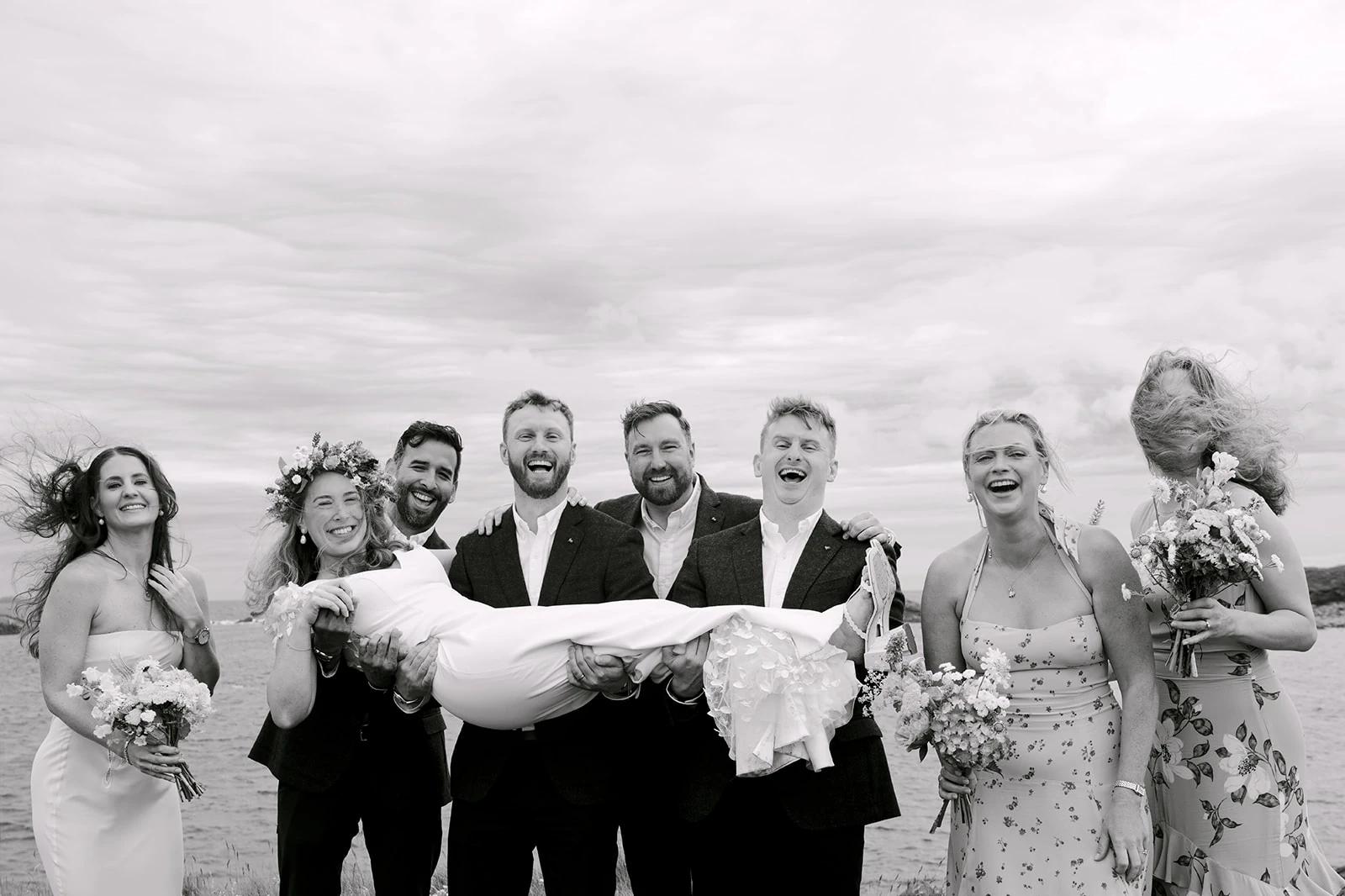
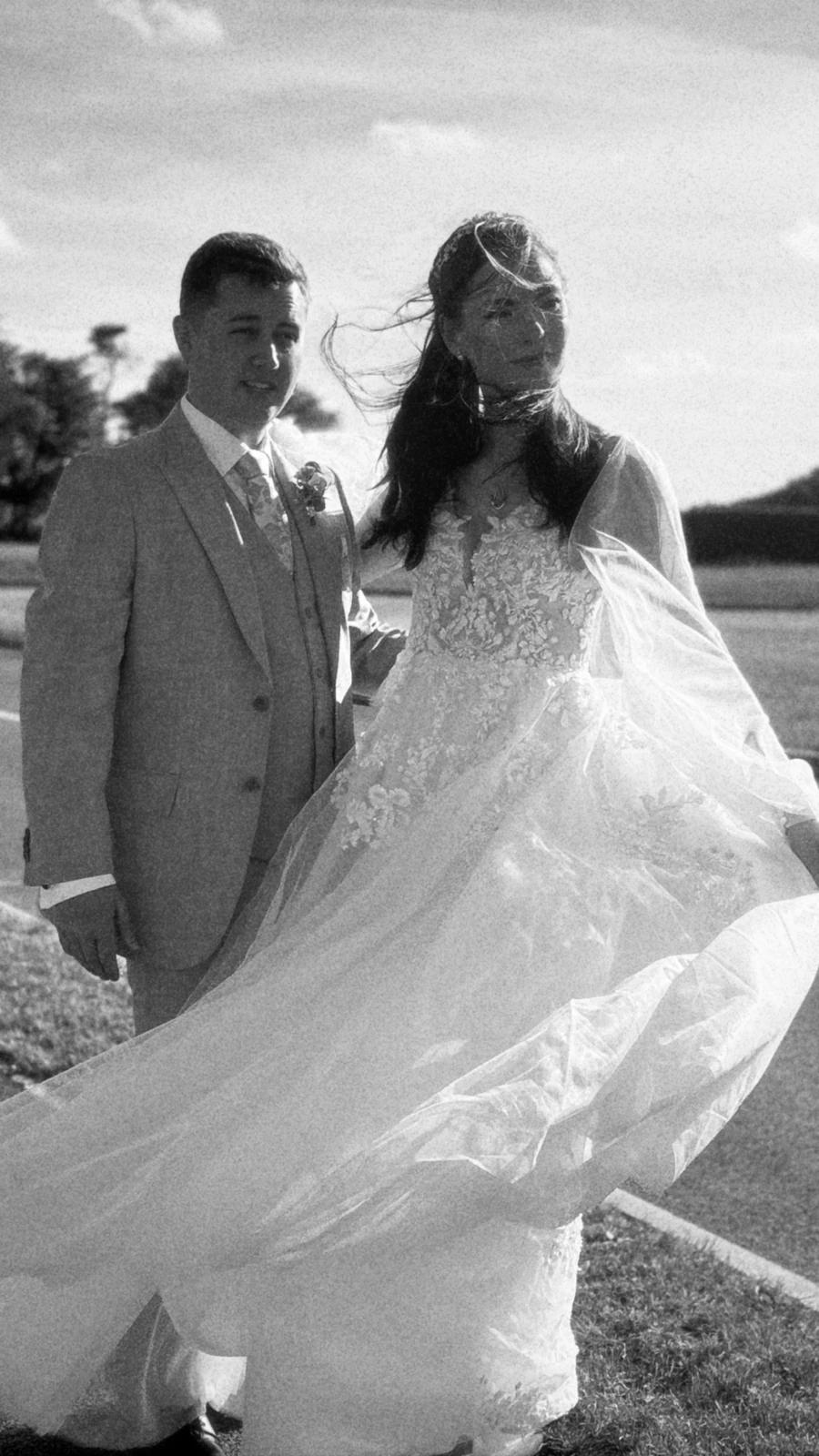
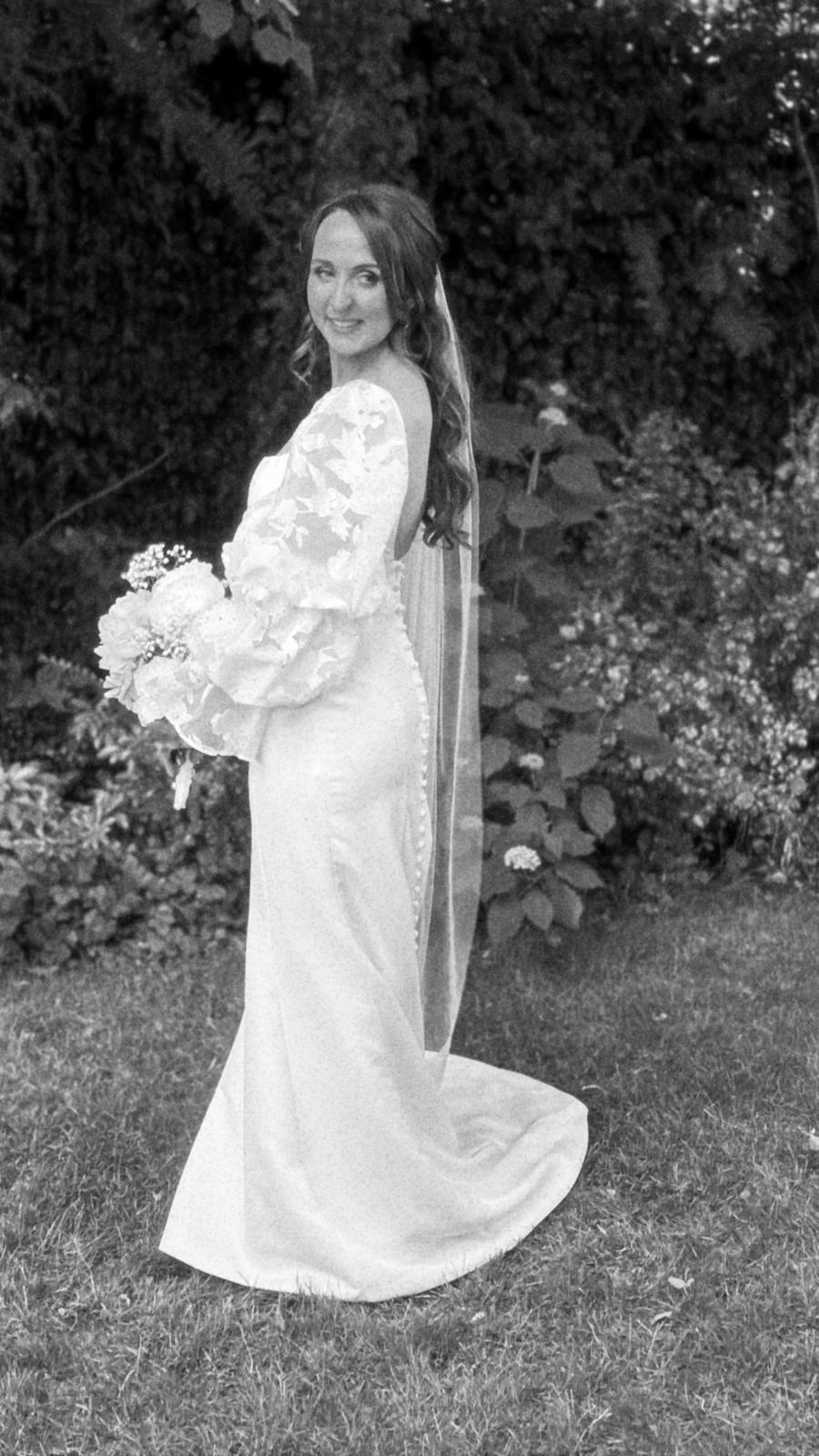
Wind is the unofficial third person in every Irish portrait. We will not fight it. A veil going sideways is usually better than a veil arranged.
Where a proper pose earns its place
Some photographs need arranging, and pretending otherwise wastes your day.
- Family groups. Eight people, twelve, twenty-two. This is not a candid moment and should not pretend to be. The kindest thing we can do for your family photographs is be quick, clear and slightly boring.
- Height. Tall people behind, shorter ones in front, children at the ends where they can be seen and can escape.
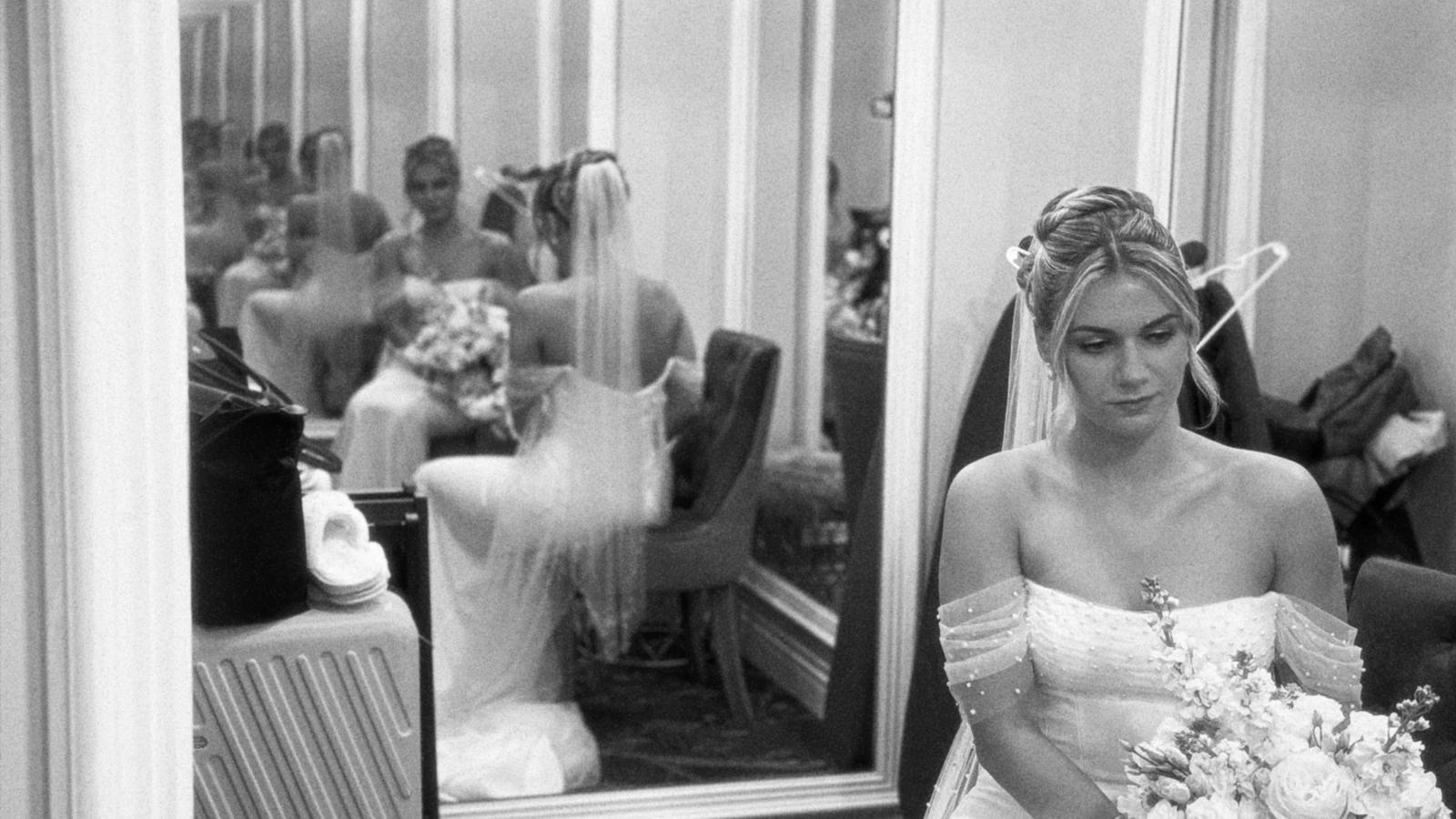
- The dress. Train, veil, the bit of the bodice that folds badly when you lean. Two minutes of arranging saves an hour of retouching.
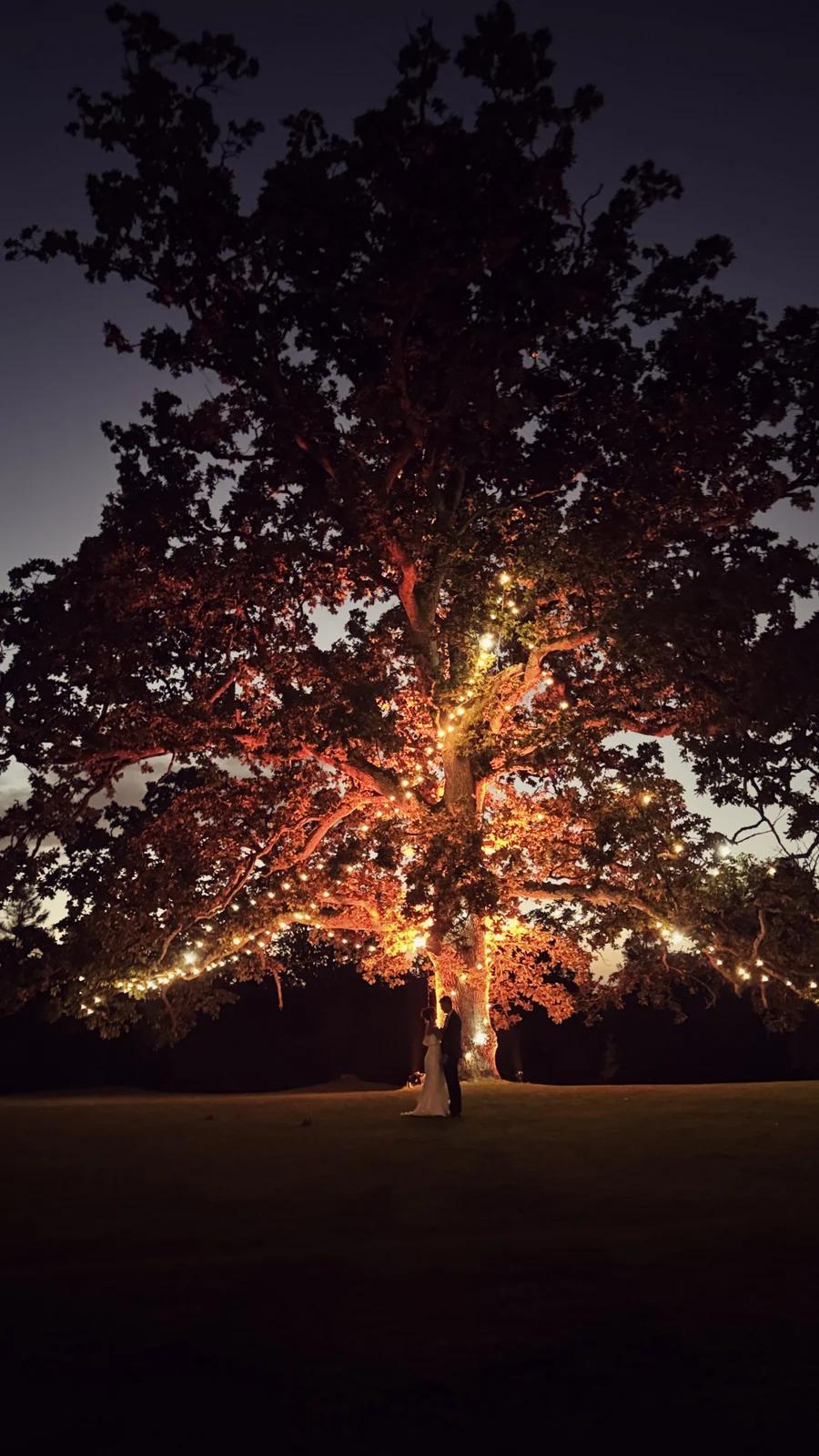
- Low light, and anyone holding still for video. When the room goes dark the shutter gets slower and the frame needs you to stop moving for a second. That is the one time we will ask you to hold.
- Anything that has to work in a film as well as a photograph. Motion is not optional at twenty-four frames a second. A couple standing perfectly still on video looks like a photograph that gave up.
The repeat is the other thing video needs. We may ask for the same walk three times: wide, then close, then from behind. In photographs that would be strange. In a film it is just coverage.
The same twenty minutes, three different jobs
People assume photography and film want the same performance. They do not, and the difference is worth knowing before the day.
Photography
Photography can take one frame out of sixty and call it a day. A second attempt costs nothing but a few seconds, which is why a photographer can chase a shape until it works. Depth of field does a lot of the rest: the background goes soft, your face stays sharp, and the fact that a car park was involved never appears in the picture.
Film
Film has to keep moving, which is why wedding films are not shot like photographs. We work on Sony FX3 bodies in available light for most of the day, and bring out Godox lights with a large soft dish when a room needs help, because a hard little source makes everyone look like they have been caught at airport security. Skin tones get graded in DaVinci Resolve afterwards, which is where a room that looked orange at nine in the evening becomes a room that looks the way you remember it.
None of that is posing. All of it decides what kind of posing is possible. A large soft source means you can move; a hard one means you stand where you are put.
Content
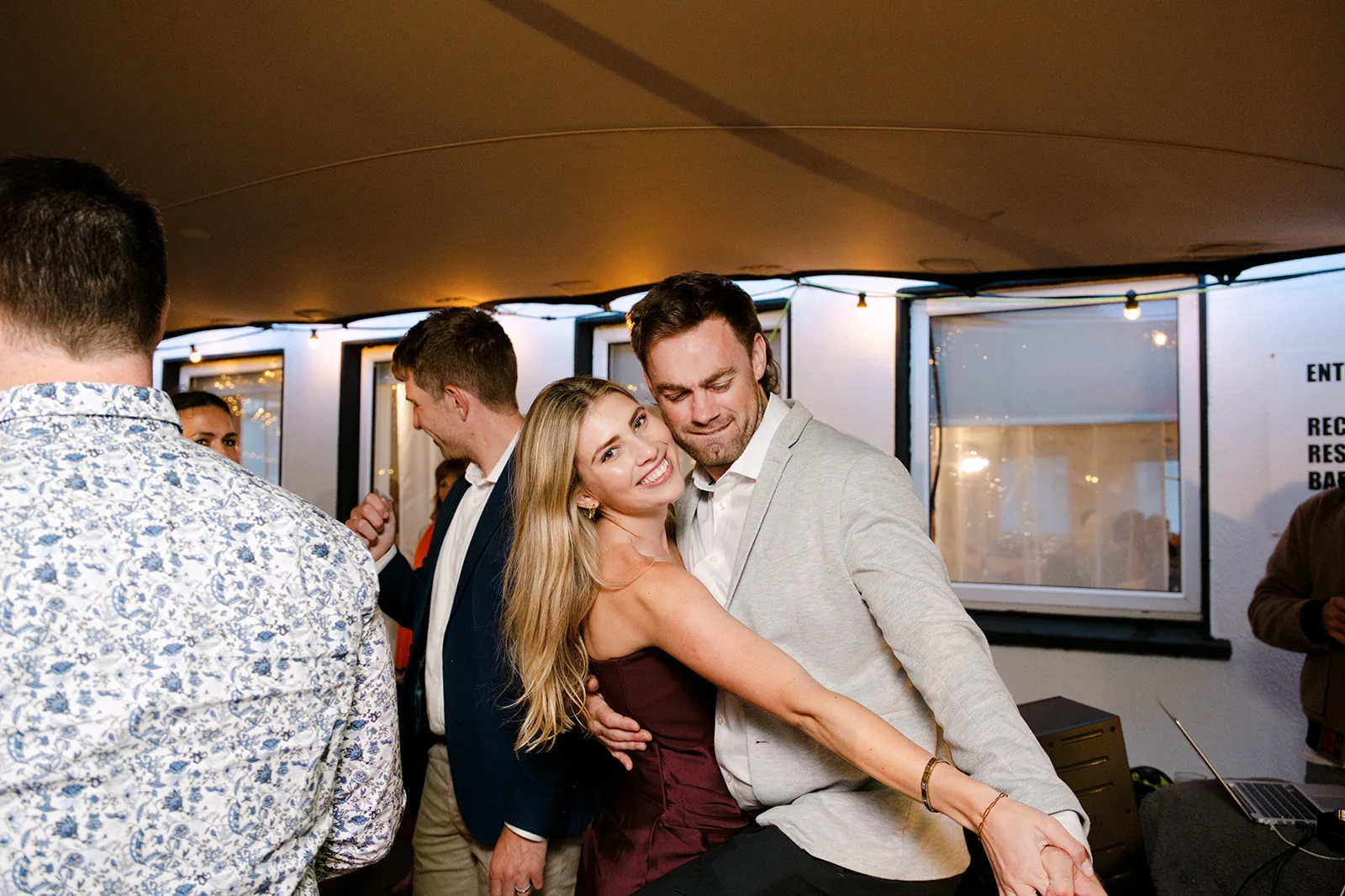
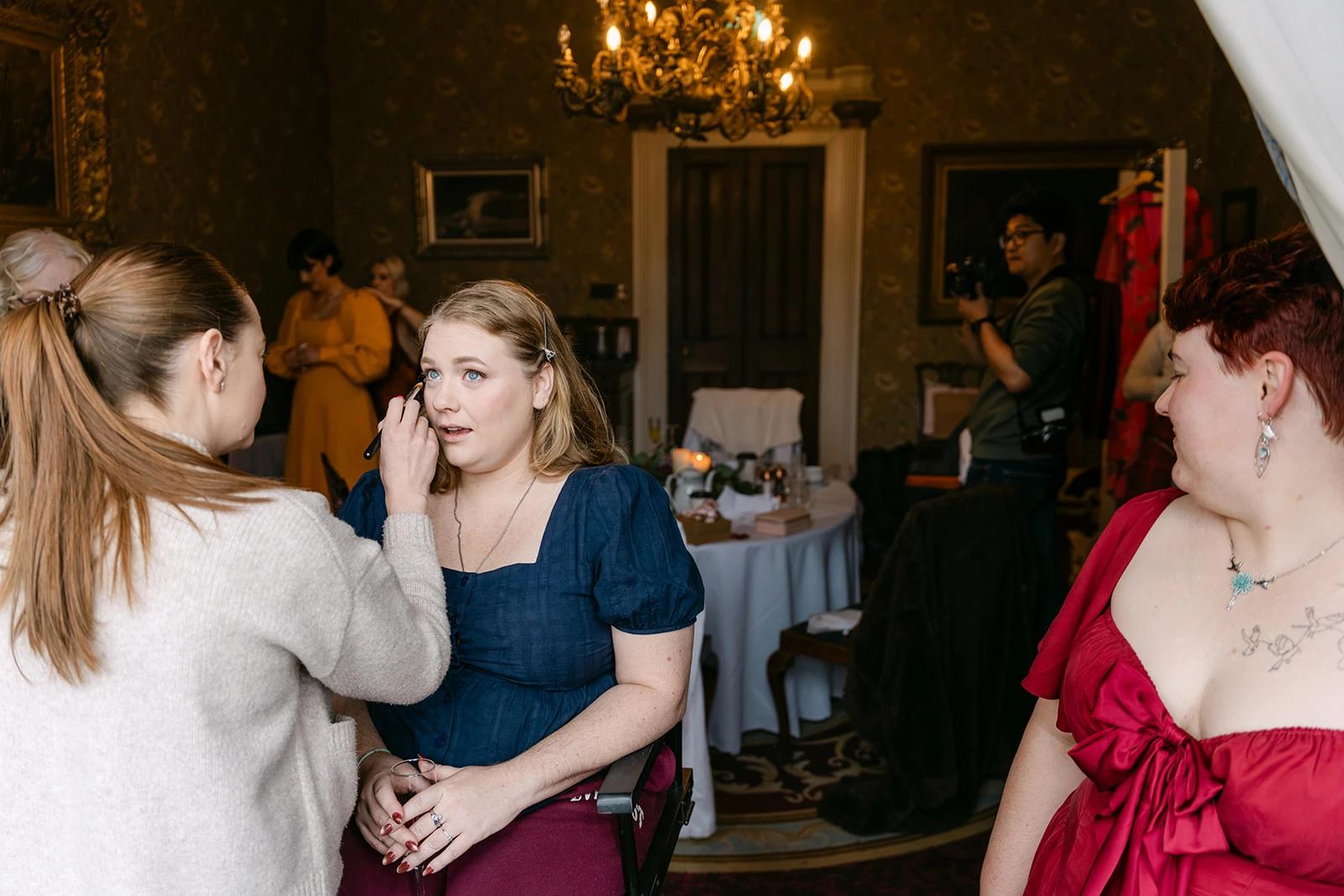
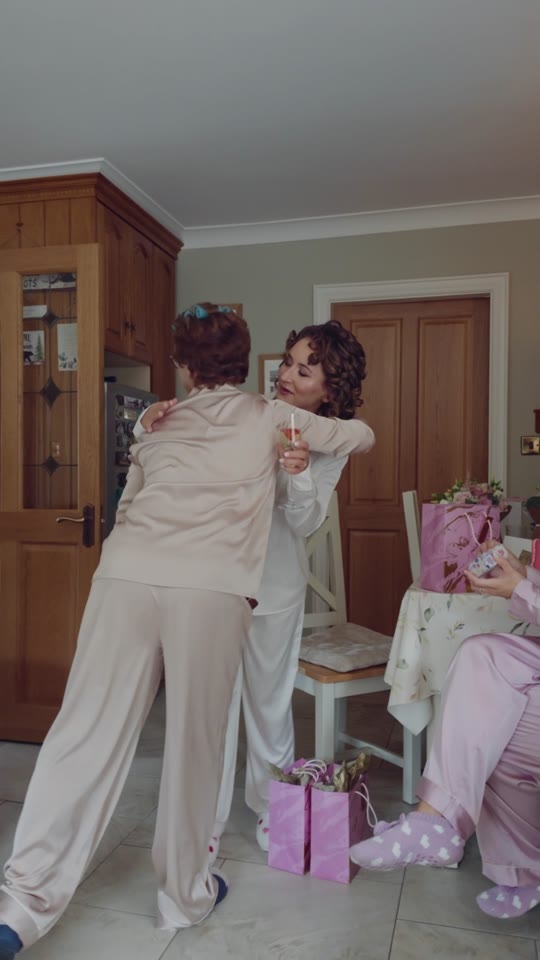
Content is the opposite of the portrait session. It lives in the in-between: the walk to the portraits, the ten seconds while the dress is being done up, the look someone gives the person holding the camera. It is filmed vertically on pocket cinema cameras, not phones, and most of it is not directed at all. One deliberate moment an hour is plenty. Two starts to feel like a shoot.
Vertical, immediate,
a little nosy.
We film wedding content on pocket cinema cameras, from morning preparations until the dancing. Short, vertical pieces with the glances, voices and dance-floor evidence that tend to travel first.
See wedding content creationWhat actually settles people
Posing advice usually ignores the real problem. It is not that you do not know where to put your hands. It is that being looked at is unpleasant, and everyone is worse at it than they think.
Two things help more than any technique. The first is specific praise: not perfect, perfect, yes, but that thing you just did with your hair, do it again. The second is seeing the back of the camera once. Most of the anxiety is uncertainty about whether you are doing it right, and one look at a frame you like removes most of it.
The third is time. If we have met before the day, even for an hour, the portraits become a conversation between people who have already done this rather than the first awkward encounter of the afternoon.
Three things to do before the day
- Look at your own camera roll. Find two photographs of the two of you that you actually like, and notice what your hands are doing in them. It is almost never hanging by your sides.
- Tell us the one thing you hate. A side, an arm, a laugh you think is too loud. We will work around it and we will not announce it to the room.
- Give the portraits a real slot. Fifteen minutes somewhere near last light, written into the day, is worth an hour of good intentions.
And one thing not to do: do not memorise a list of poses from Instagram. You will spend the afternoon performing someone else's wedding.
The honest answer
About a dozen instructions in a ten-hour day. Feet, hands, walk, stop, again, closer. Most couples remember two of them, and the photographs do not suffer for it.
The frame that ends up on the wall is usually the one taken four seconds after you stopped trying. Our job is to make sure there is a camera there when it happens, and that nobody is standing like they are waiting for a bus.
If the forecast is the part worrying you, the rain plan guide covers what to ask the venue and what to keep in the car.