Audio4 min read
How wedding film audio is recorded
A ceremony can leave the house with six audio devices on it and still keep a spare in the bag. Not because six is a nice number, but because nobody is going to do the vows again.

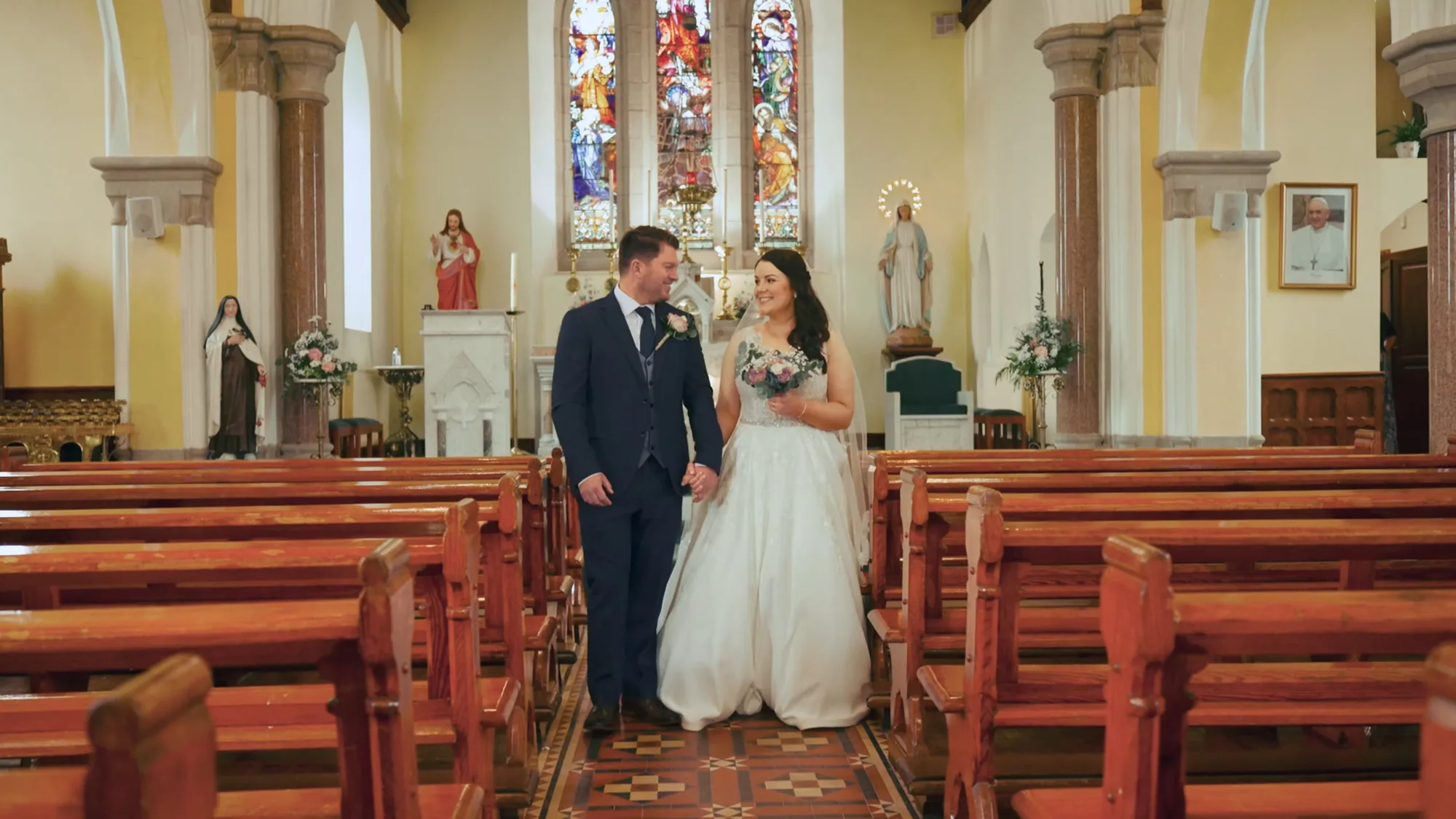
Six devices, one ceremony, no second take.See the work
Six sounds excessive until you list what a ceremony throws at a microphone: a celebrant with the PA louder than the couple, a reading done into a sheet of paper held at chin height, a string trio under a stone roof, late arrivals, a door, a cough, a baby, and wind on the porch.
A wedding happens once. Nobody is doing the vows again for the sound, so the audio plan gets built like anything else that has to work the first time.
Ten weddings,
viewed properly.
There is confetti, a dog underfoot, a small committee of Irish wolfhounds and two grooms making a run for it. Press play and put the sound on. The still frames only get you so far.
See the full gallery


What goes where
- The celebrant. A microphone on the person doing the talking. Most of the ceremony is there.
- The two of you. A lavalier each, placed high, taped down, and hidden under a lapel or inside the jacket.
- Whoever is reading. The reading is usually the quietest thing in the building, and it is the part families quote back to you for years.
- The musicians. A dedicated microphone, so the music is not whatever a distant room mic hears at the back of a church.
- The room. One device to hold the room itself: the responses, the congregation, the laugh when the ring is fumbled.
- A backup recorder. Something that does nothing but run, in case everything clever fails.
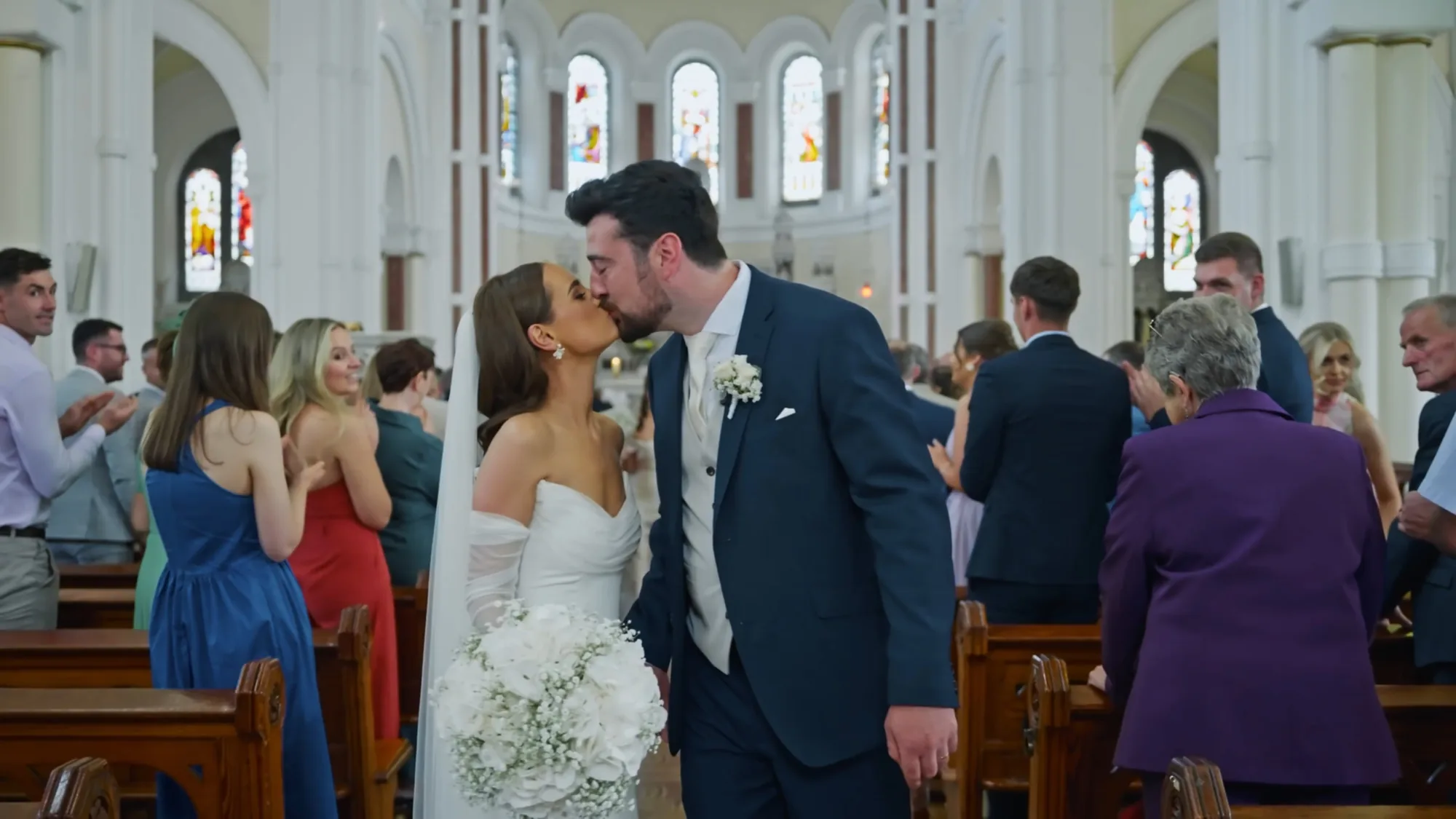
Backups with backups
It stops sounding excessive the first time a transmitter dies mid-vow. We run Sony systems with lavalier microphones, and alongside them DJI mics, which pair in seconds and get used where speed matters more than anything else.
The point is not brand loyalty. It is that the second system fails differently. A dead battery, a sweat patch, a dress rustling over a capsule, a receiver that decides to re-pair in the middle of the first reading: none of those take out all of it at once.
So there is a main system, a second system, and something recording the room whatever else is happening. On a ceremony that is sometimes six devices for two people saying twenty sentences.
In practice that is Sony systems on the people who matter, DJI mics where something has to be clipped on in a hurry, and a recorder running from the moment the first guest sits down. A Sony lavalier taped under a lapel at nine in the morning is still working at ten at night, which is the only review that counts.
The part nobody notices: sync
Sound recorded separately from the picture has to meet it again. Each clip is matched to its track by waveform: the same cough or hand-clap appears in the camera's own scratch audio and in the recorder, and the software lines them up to the frame.
None of it is visible in the finished wedding film, which is rather the point. That is why the camera's built-in audio still matters even though nobody will ever hear it. If the scratch track is unusable, the sync becomes guesswork, and guesswork is how a film ends up a half frame out at the kiss.
Music is its own job
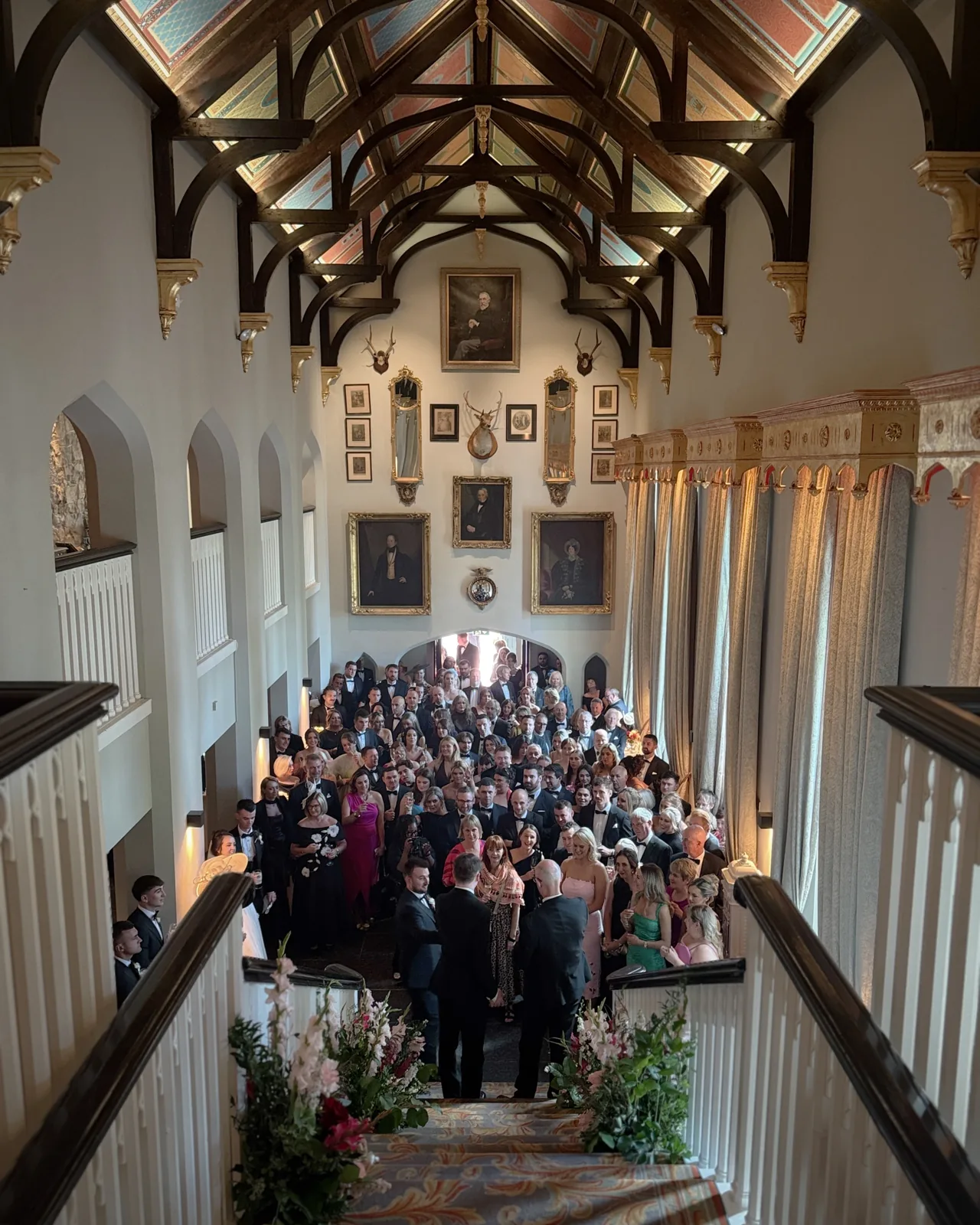
A high ceiling turns a string trio into a room with something happening in it. A dedicated microphone on the musicians is the difference between music and atmosphere, and it is the reason a ceremony film can open on the first bar instead of a voiceover.
A still gives
you longer.
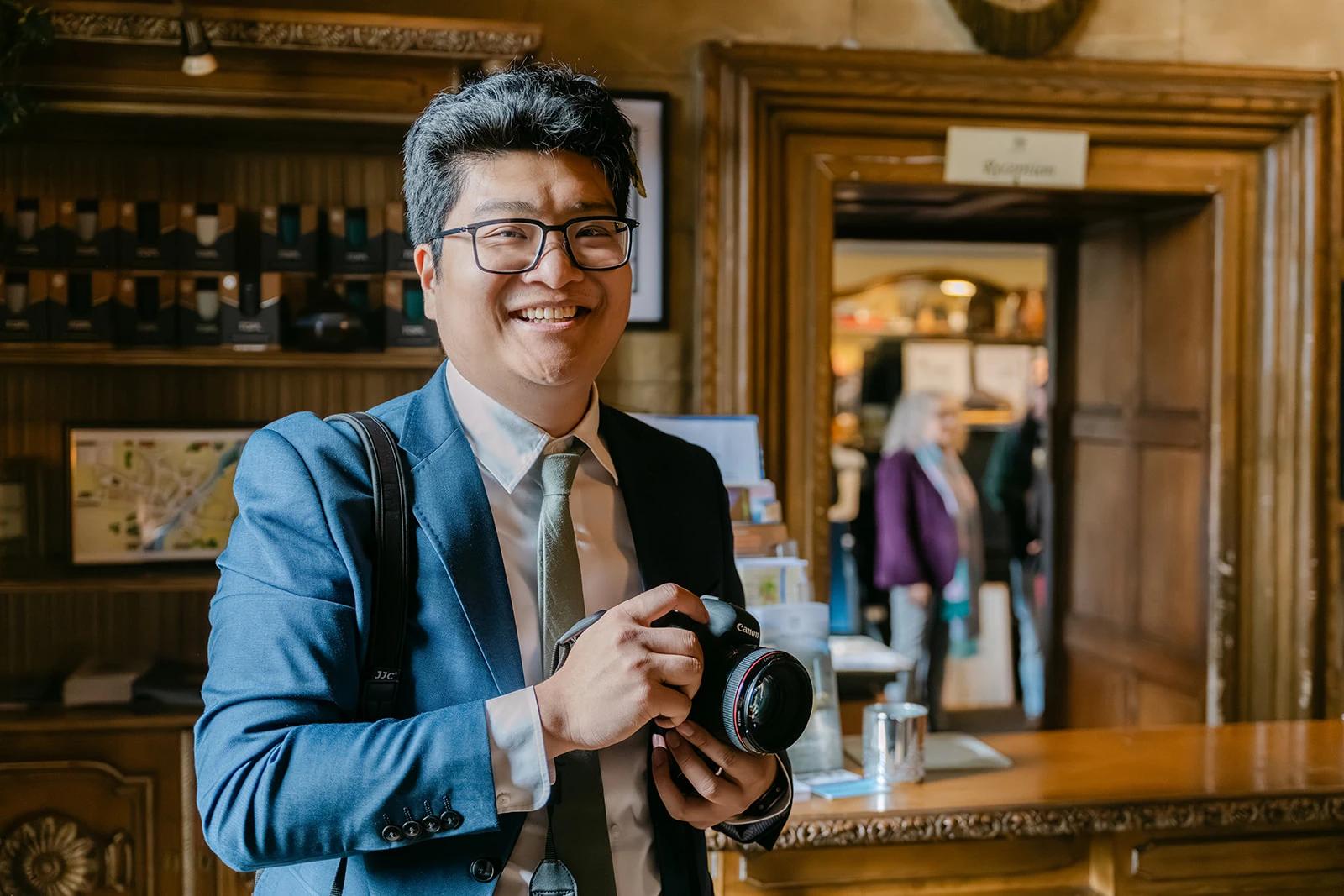
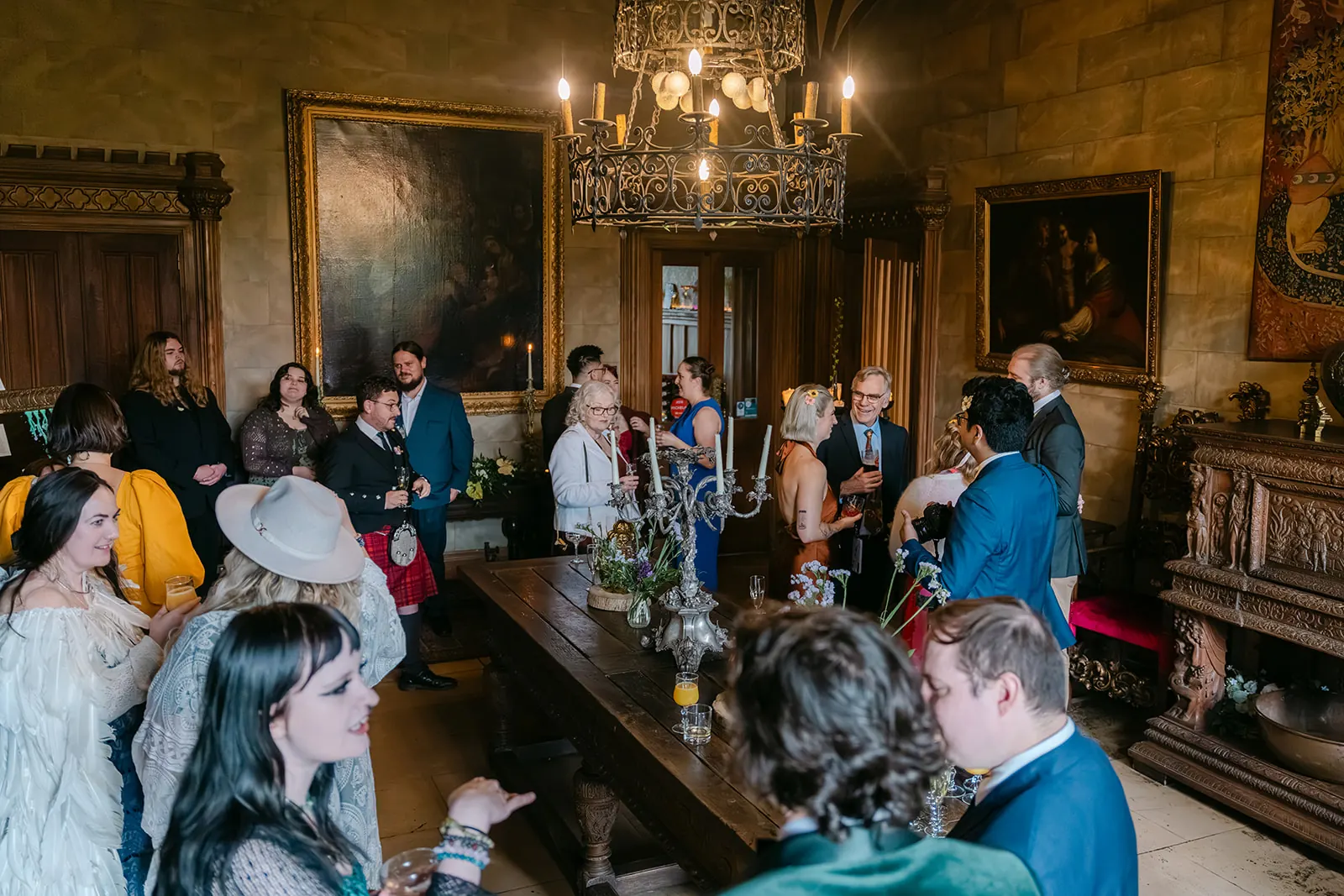
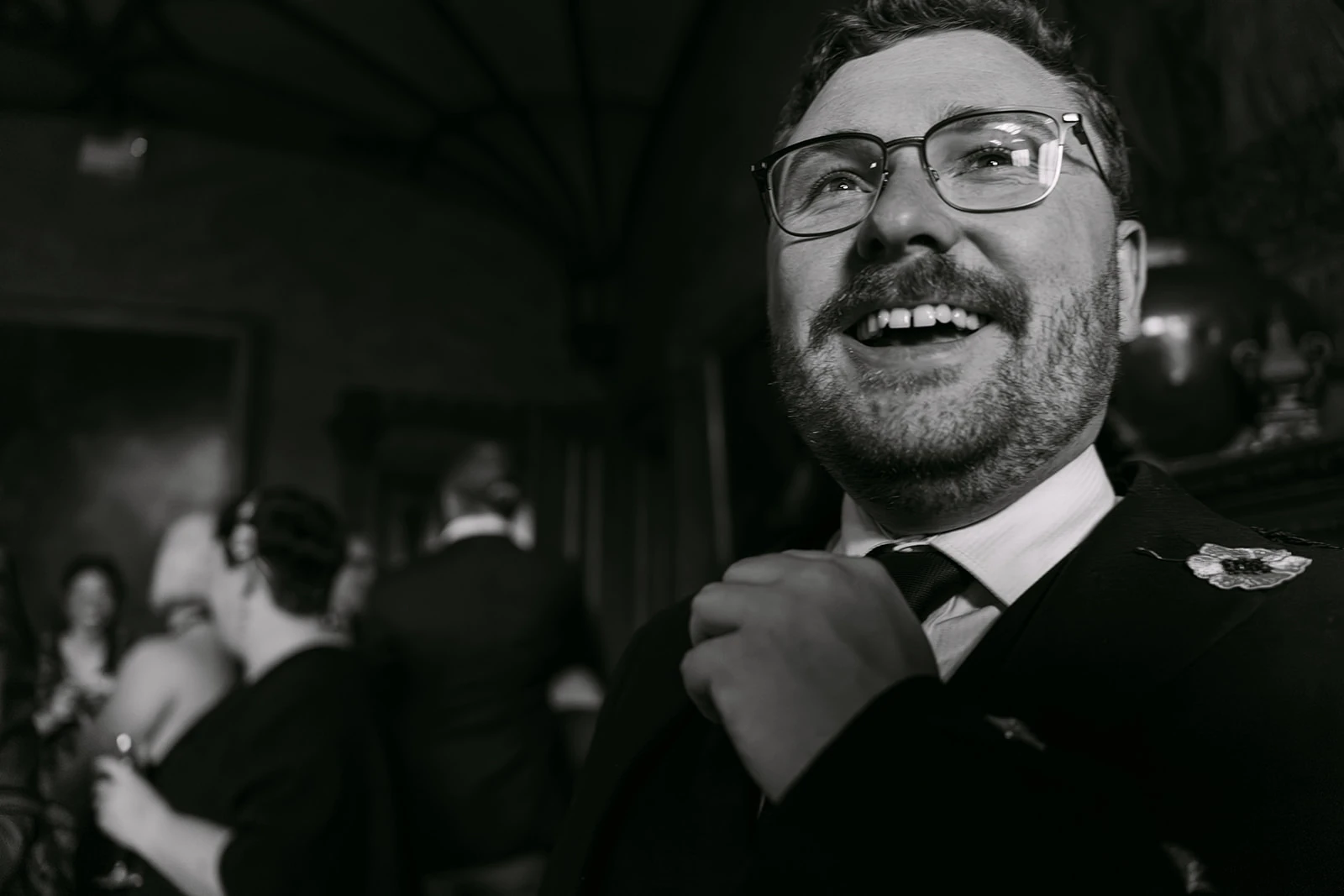
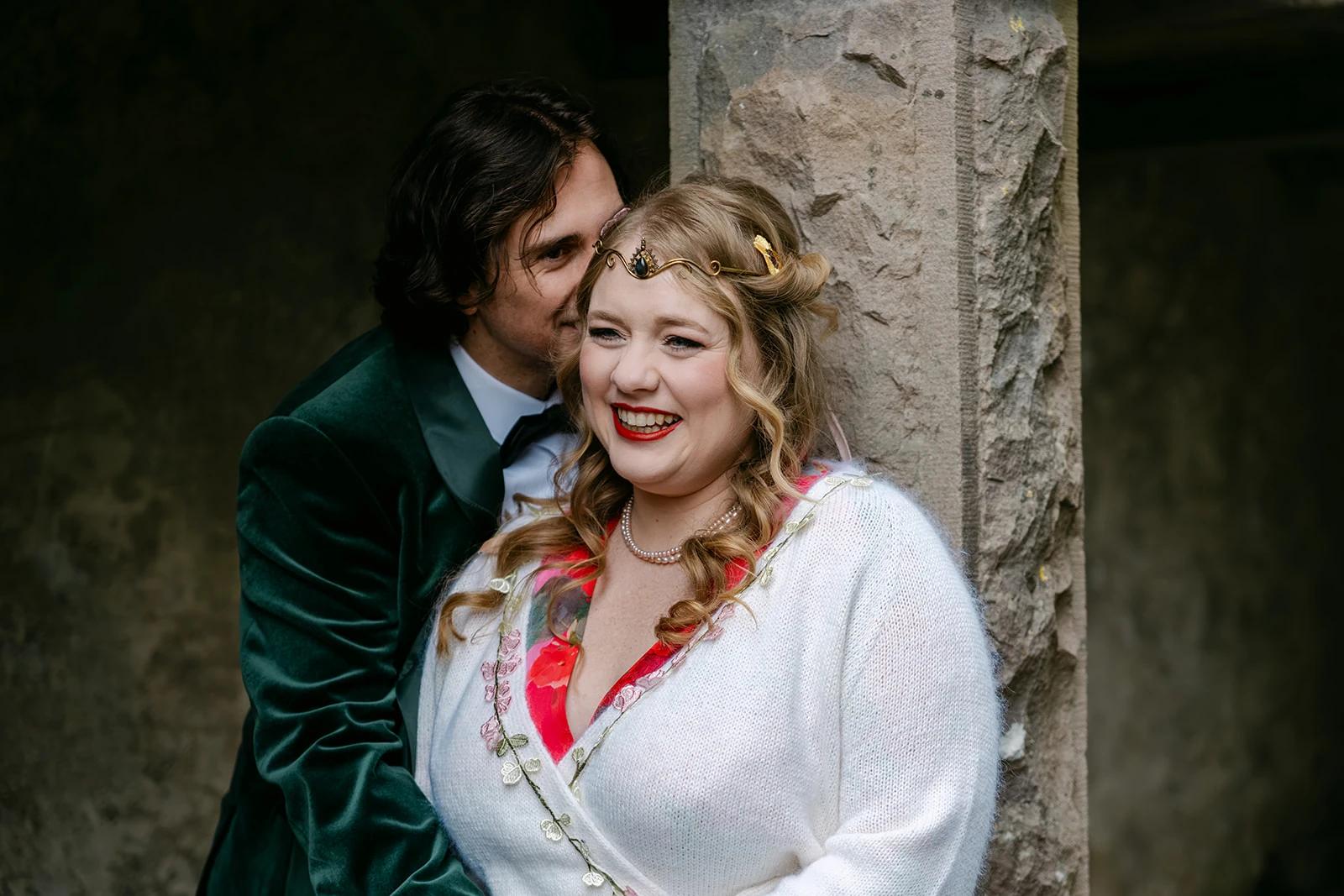
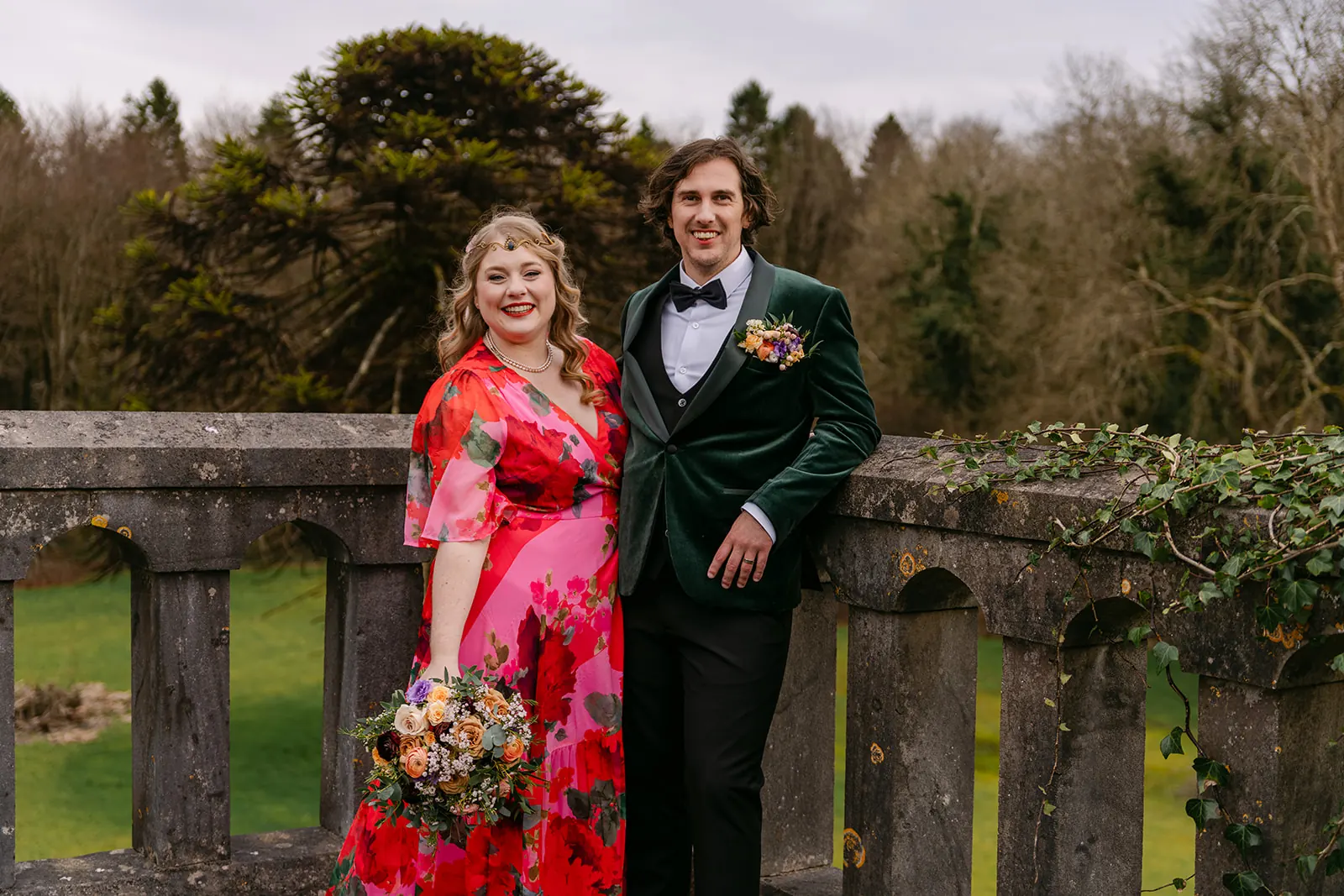
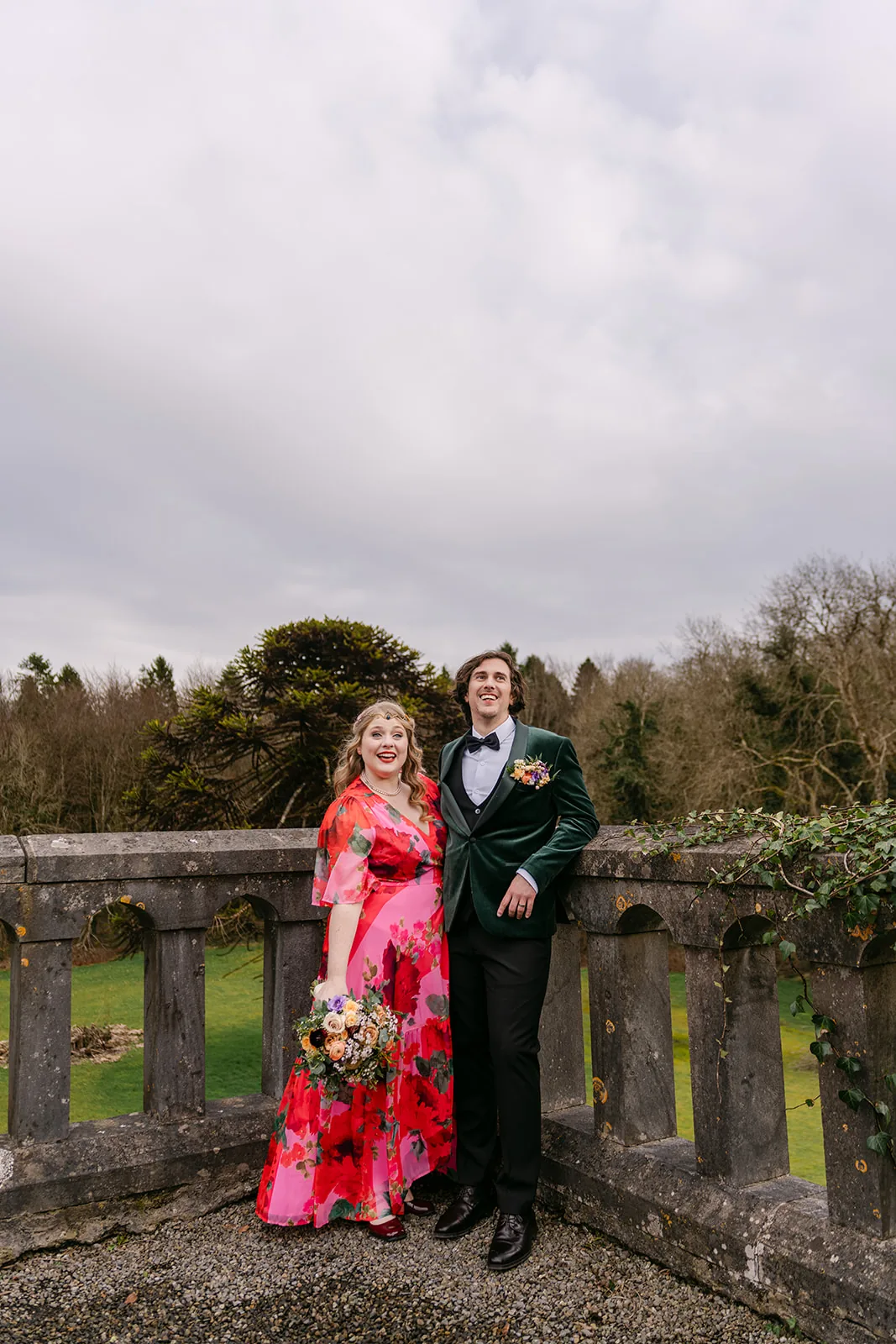
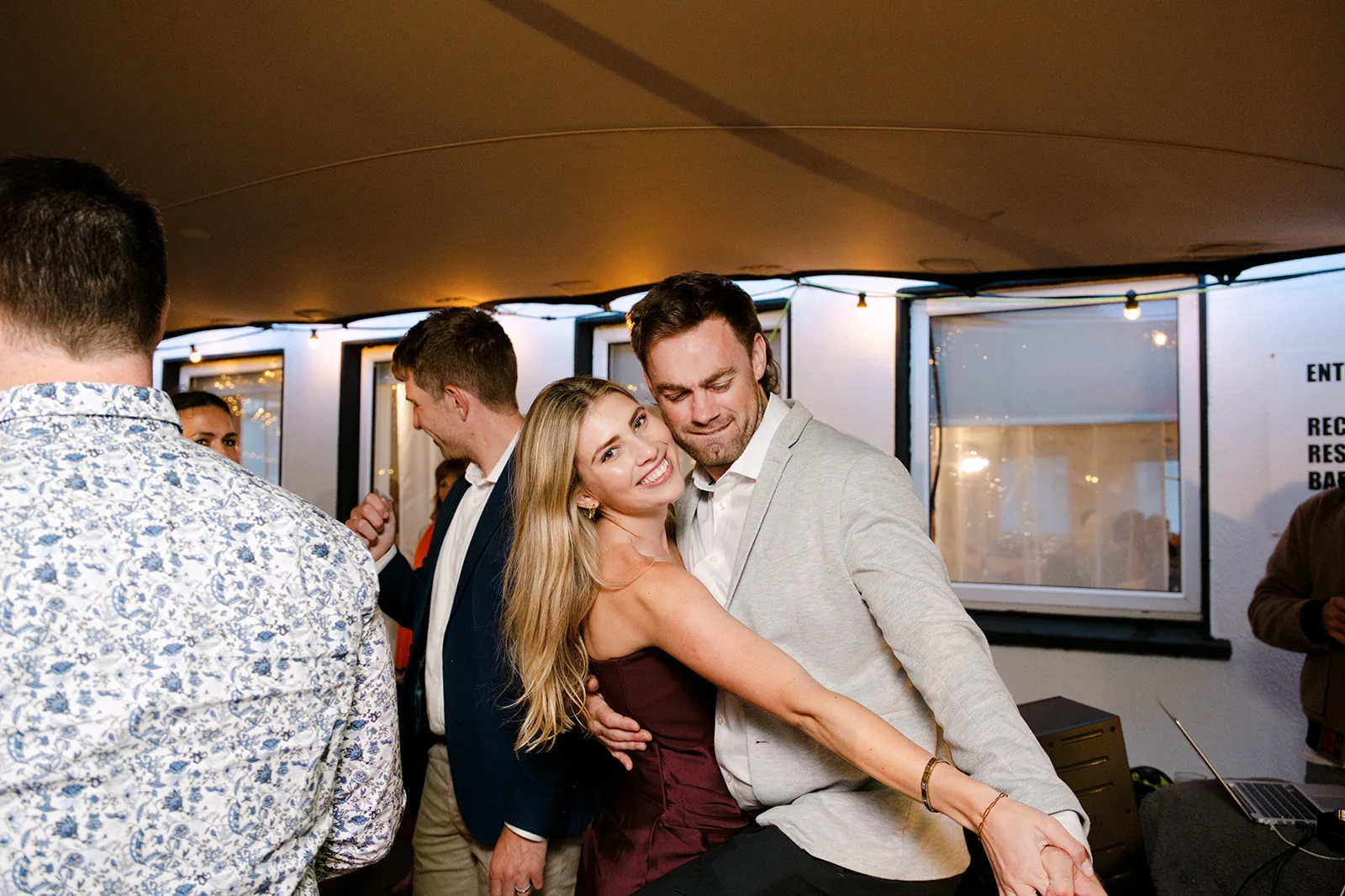
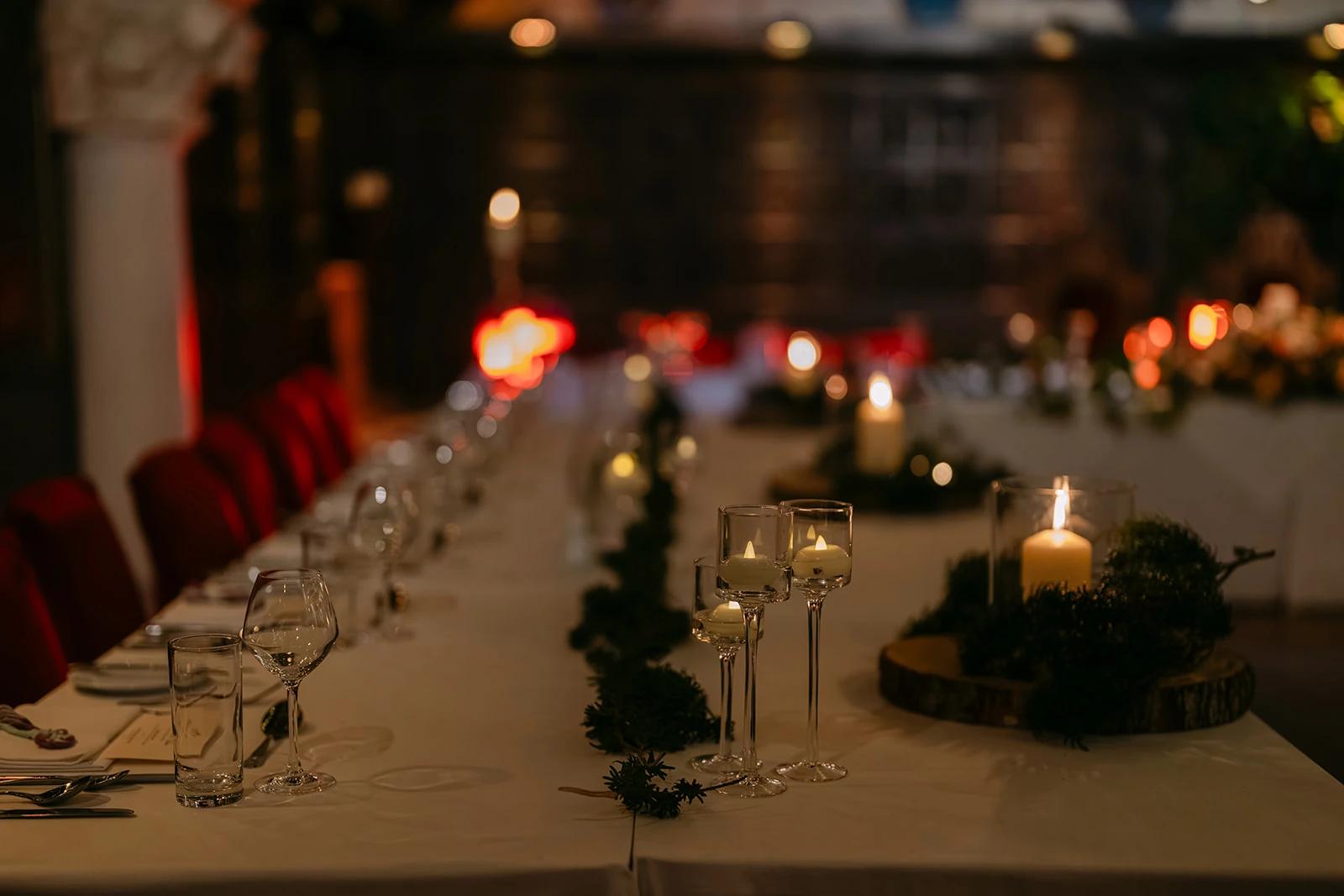
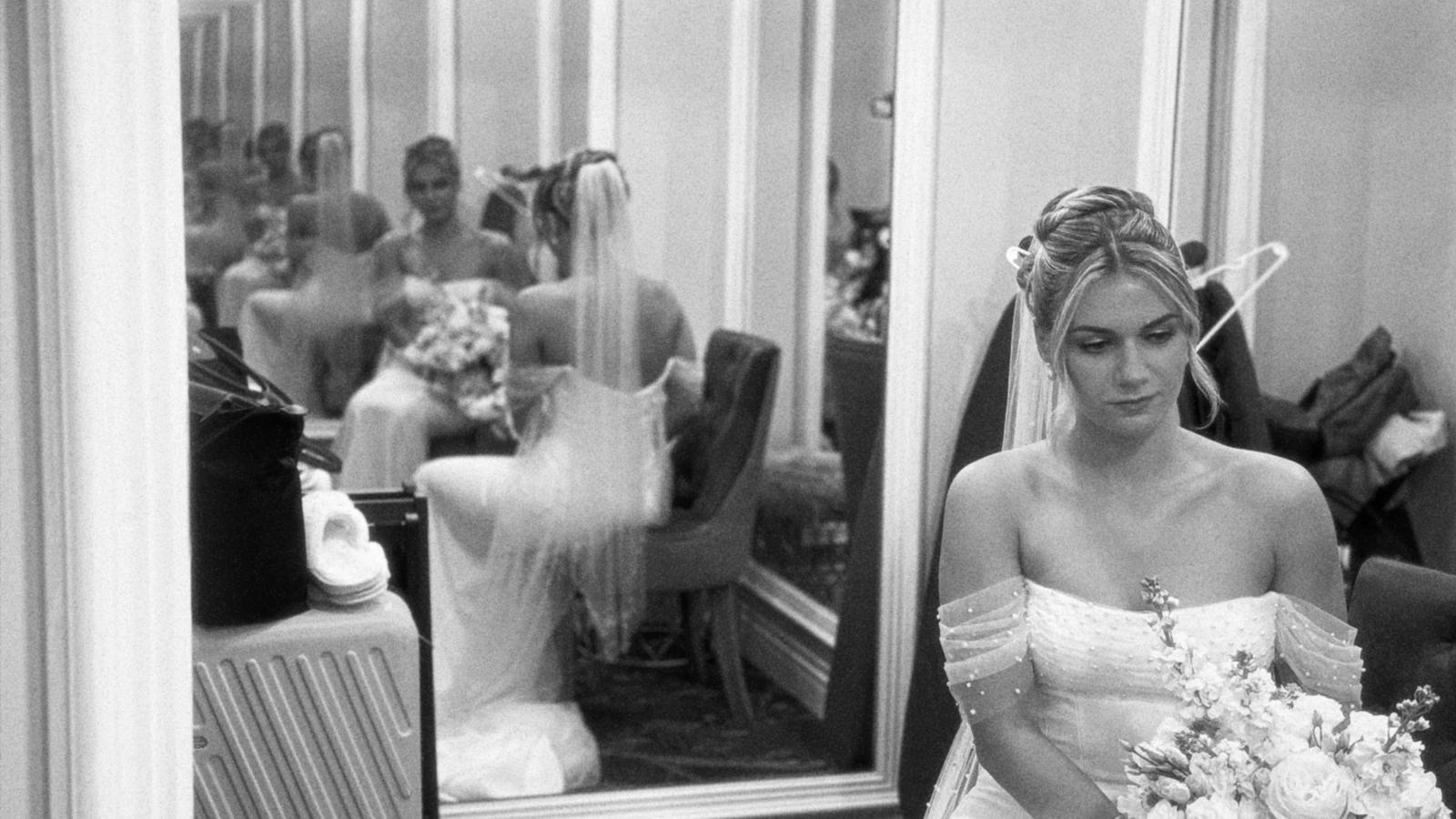
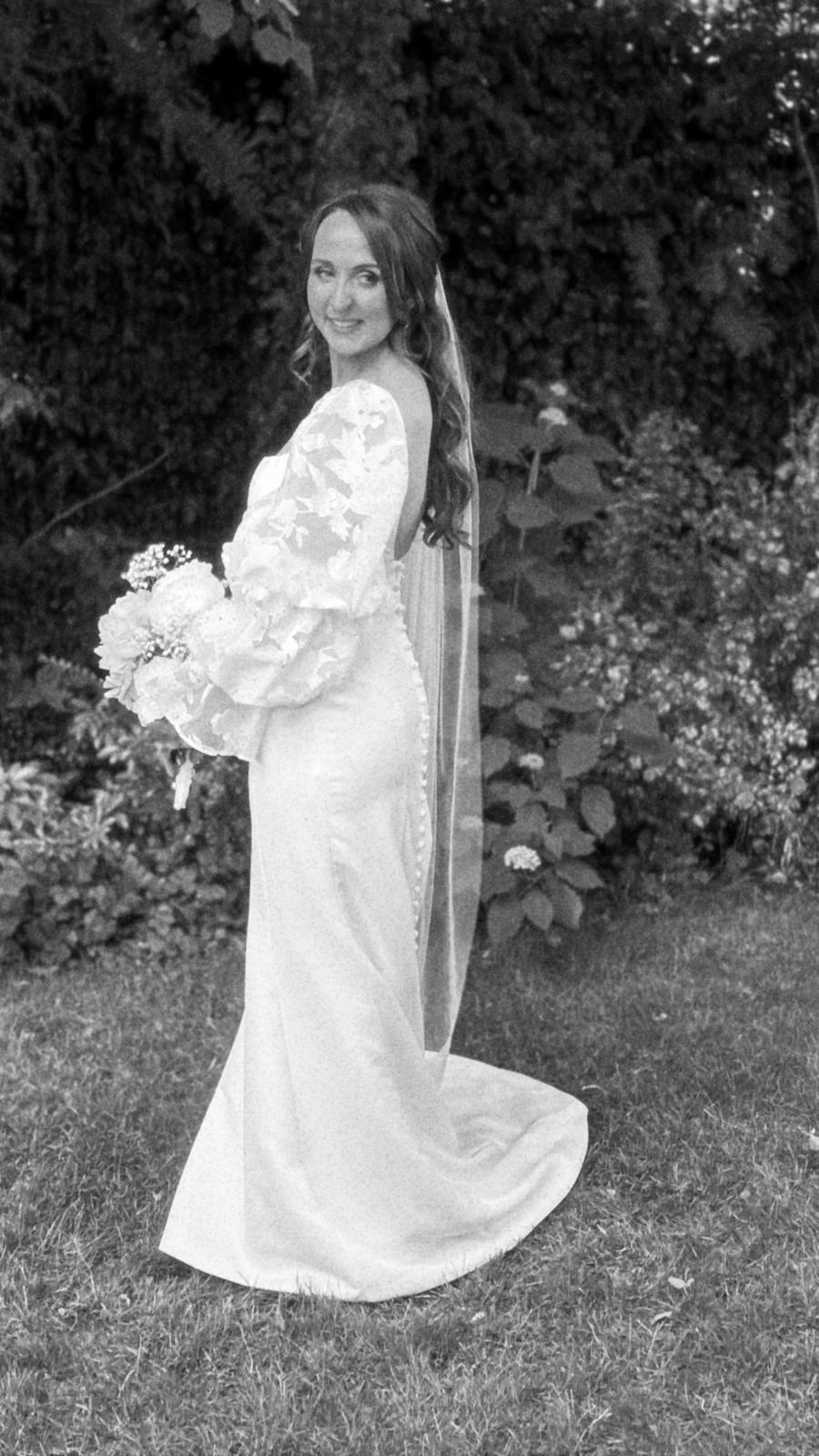
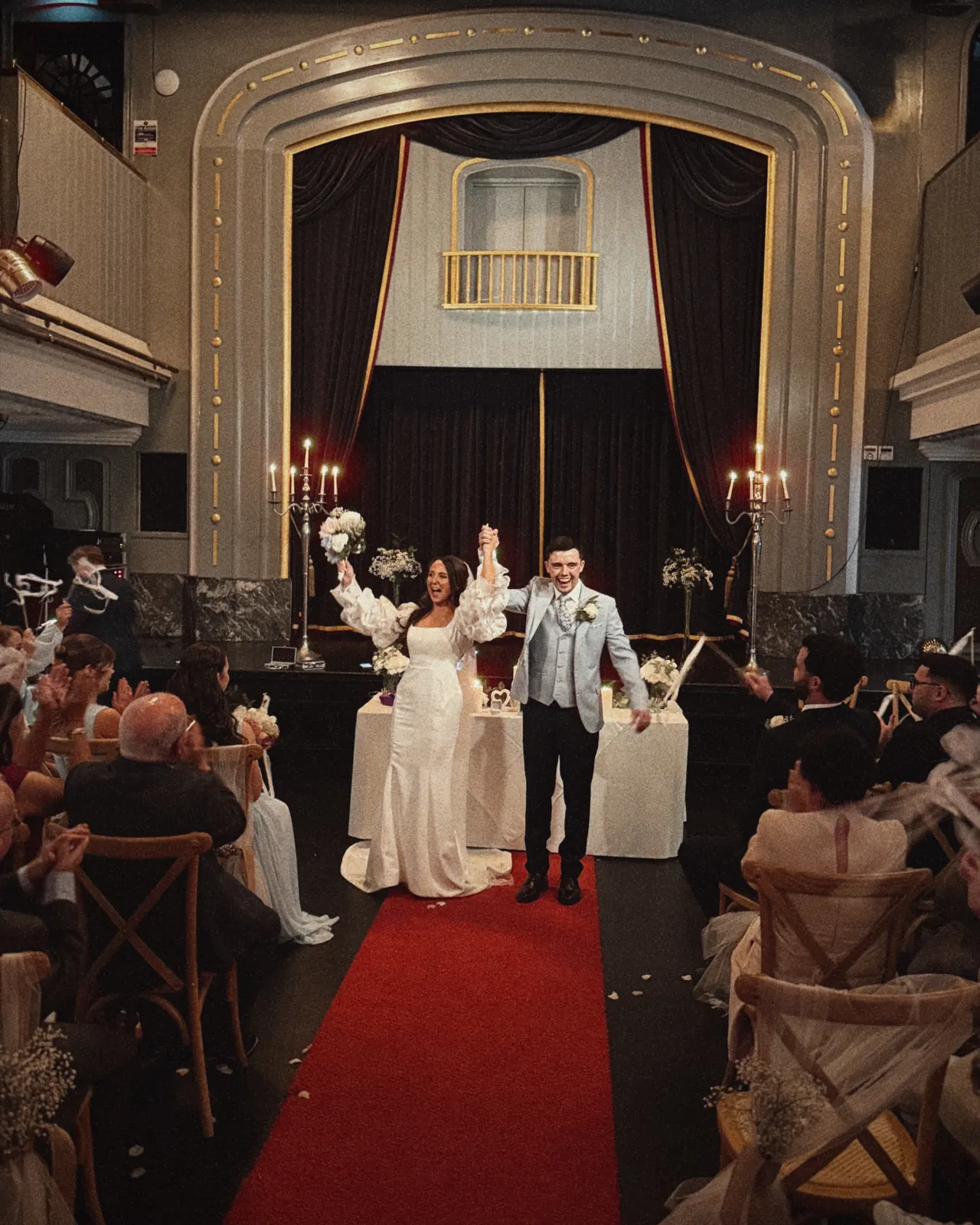
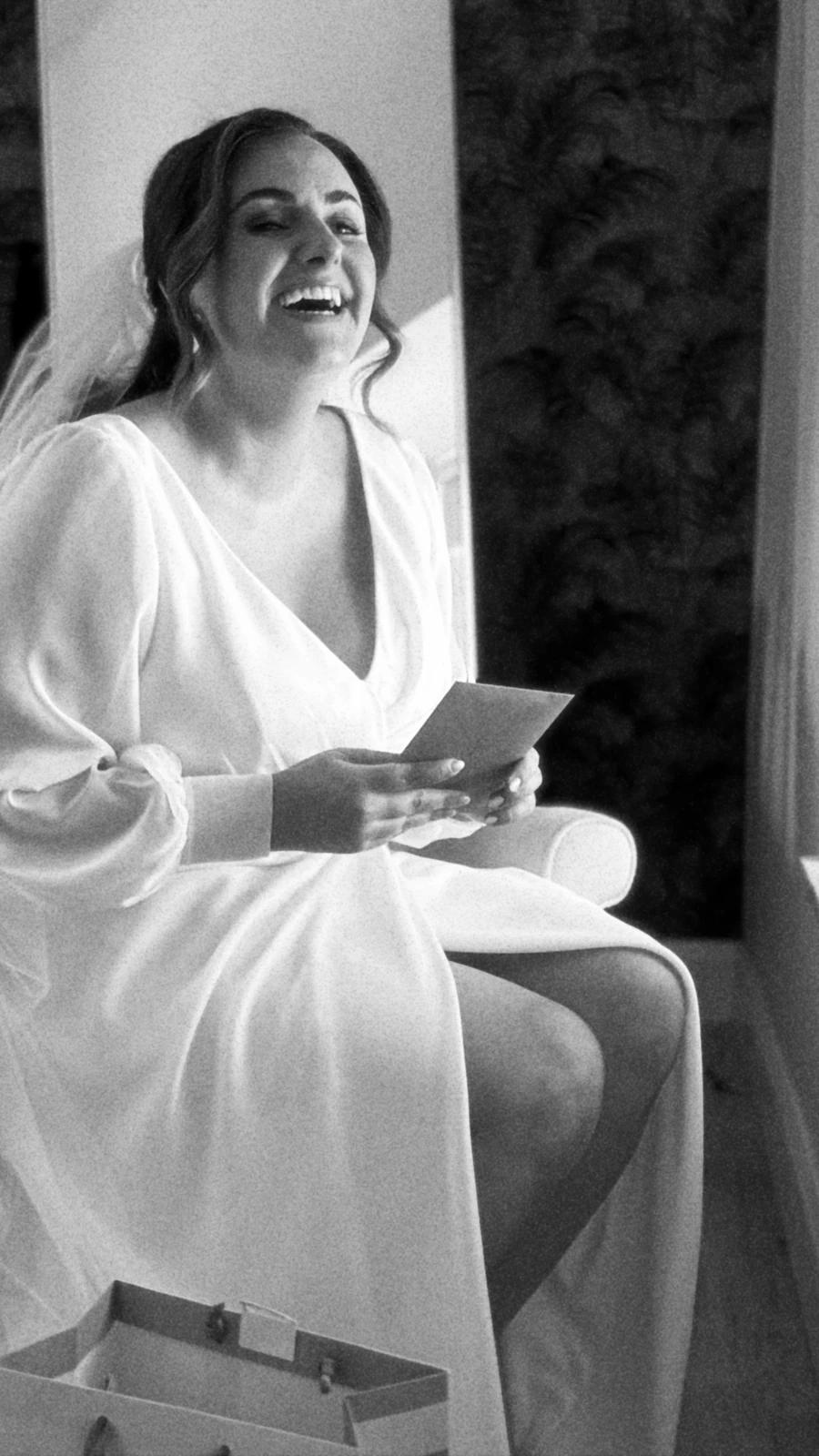
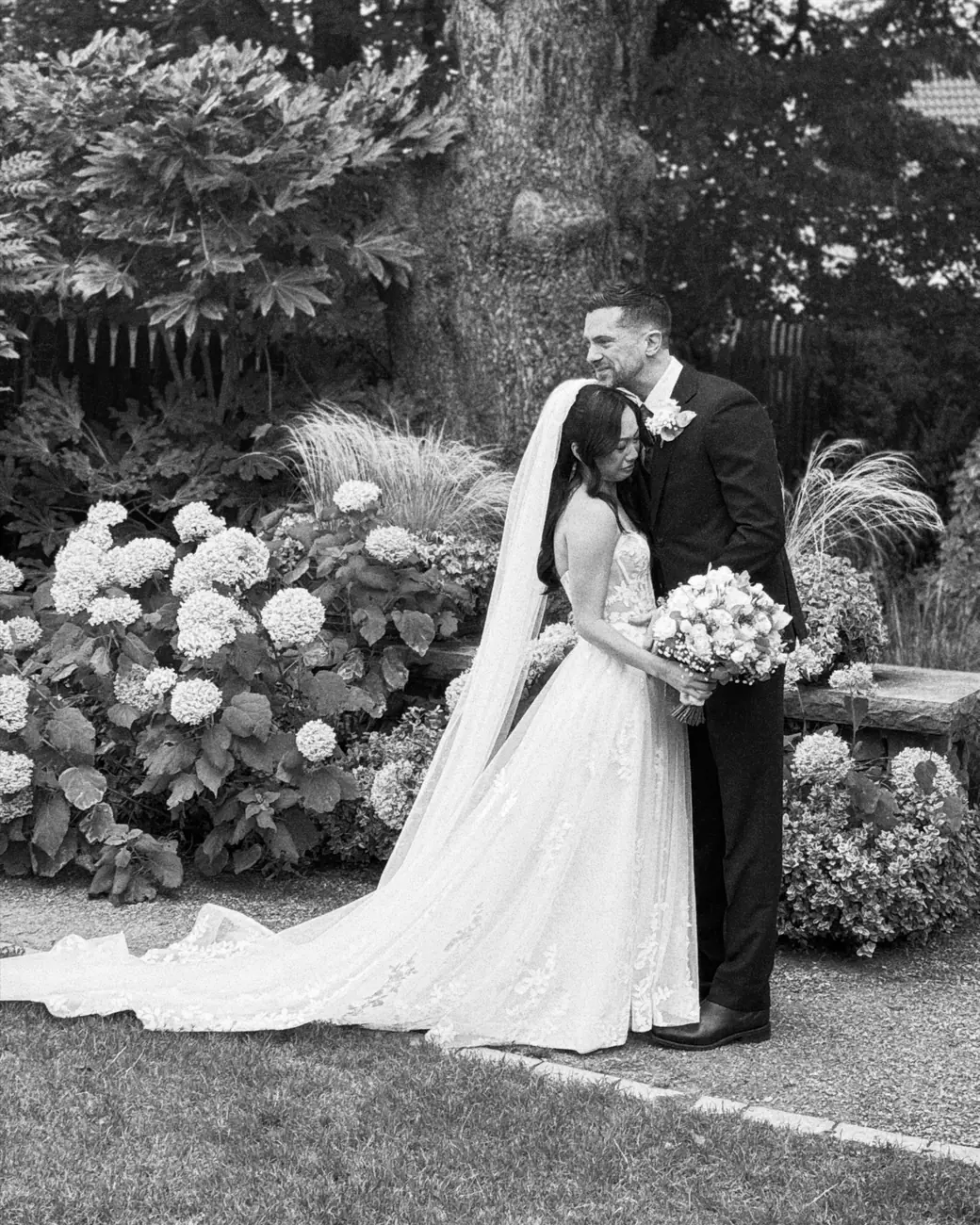
Wedding photographs for looking at properly. Portraits, atmosphere and the frame beside the obvious one. Some explain themselves immediately. Others are slower, which is useful.
See wedding photography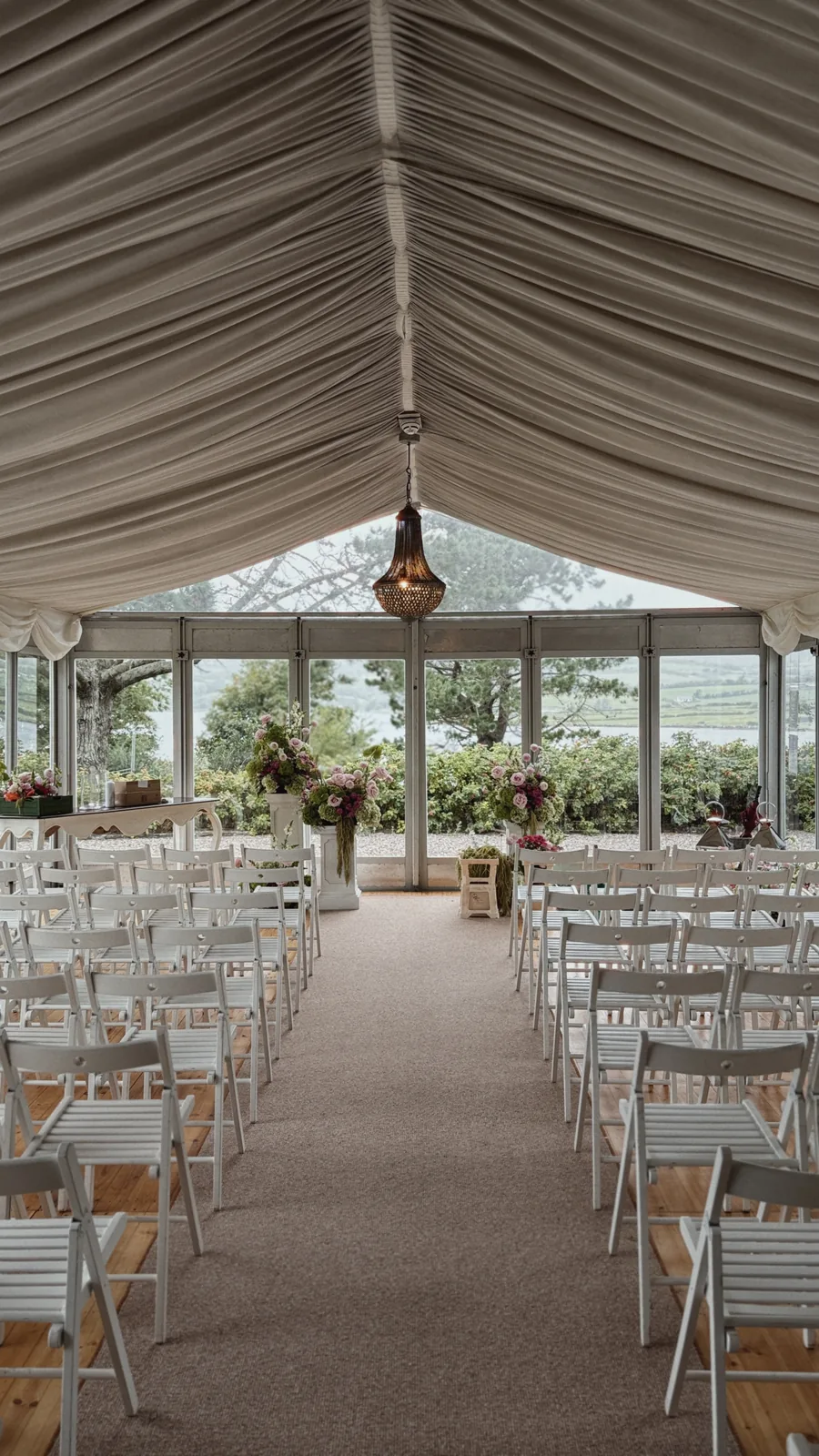
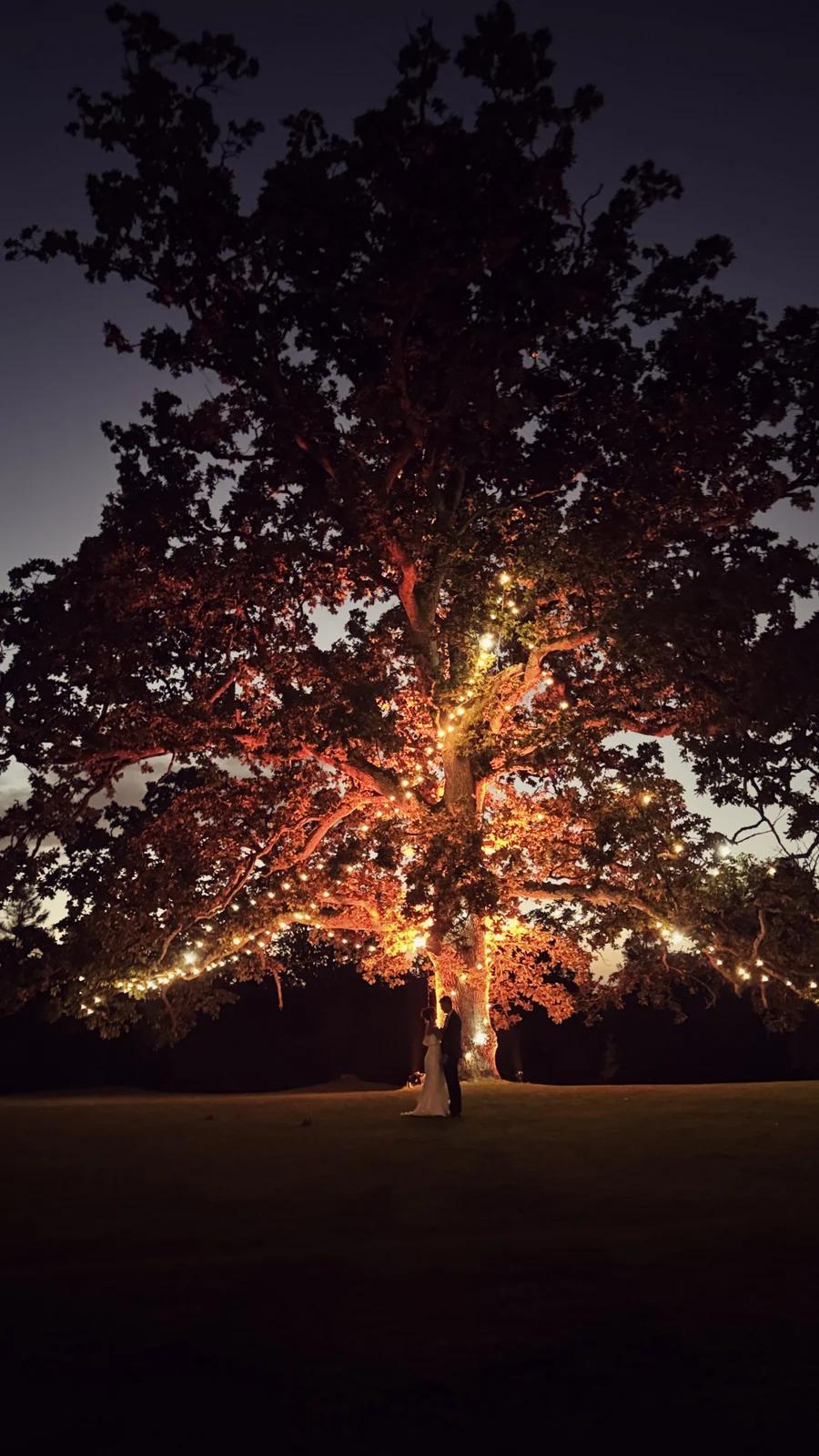



Two things that genuinely help
- Tell us who is speaking. Names, order, and whether the reading is from paper or a phone. It decides where a microphone goes before the ceremony rather than during it.
- Keep phones away from the microphones. A phone set down beside a lavalier is a buzz on the track for the whole first reading.
The honest answer
The photographs from the same ceremony do not need any of this, which is why they are the easy half of the day.
You will never see the audio. You will notice if it is wrong: a vow you cannot hear, a speech that sounds like it happened in another room.
Six devices is what it takes for that not to happen.